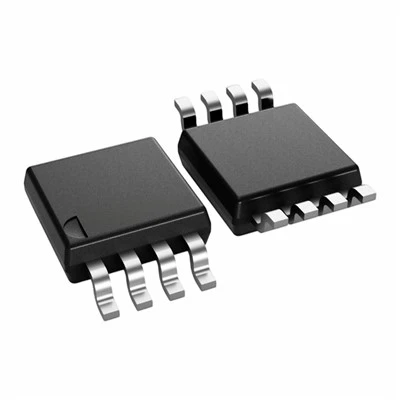
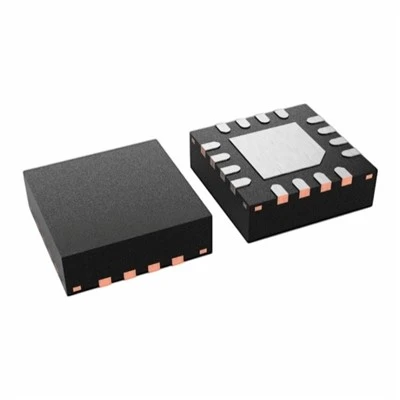
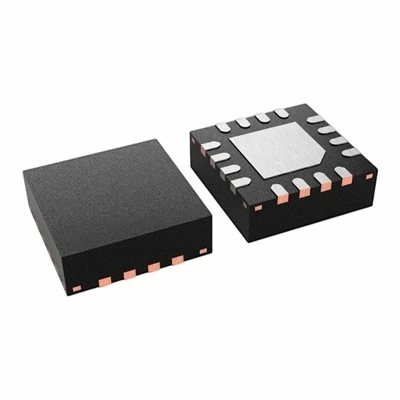
Introduction to Instrumentation amplifier chip
Instrumentation amplifiers chip are specialized operational amplifier chips designed for high-precision small-signal acquisition scenarios. Their core function is to address the amplification of weak differential signals that cannot be properly processed by conventional operational amplifiers, making them core analog front-end devices in fields including industrial sensing, precision measurement and medical electronics.
These chips typically adopt an optimized design based on the classic three-operational-amplifier architecture. The first stage integrates two high-precision matched non-inverting amplifiers, which inherently feature extremely high input impedance and can significantly reduce the load effect on the signal source. Even when interfaced with millivolt-level sensor signals with weak output capability, it will hardly cause signal attenuation. The second stage integrates a high-performance differential amplifier that can accurately eliminate common-mode interference on the transmission line and achieve accurate amplification of differential signals. Thanks to the laser trimming and calibration of internal resistors during the chip manufacturing process, the common-mode rejection ratio (CMRR) of instrumentation amplifiers generally reaches over 80dB, and some high-end industrial products can even exceed 120dB. Even in industrial sites with strong electromagnetic interference, they can effectively offset power frequency interference and RF common-mode noise superimposed on long transmission lines, and extract effective target small signals from signals mixed with a large amount of noise.
Compared to discrete op-amp implementations that require numerous external matched resistors, integrated instrumentation amplifier chips offer extremely simple gain configuration. Most models allow for continuous gain adjustment-ranging from 1x to several thousand times-using just a single external resistor. Some models feature built-in precision gain resistors, requiring no external components at all; instead, standard gain settings can be selected via pin configurations. This greatly simplifies peripheral circuit design while completely eliminating issues common to discrete solutions, such as reduced CMRR or gain inaccuracy caused by poor resistor matching.
Product Description
The INA351A is a fixed-gain (10x) instrumentation amplifier chip featuring a compact package design and an integrated, configurable reference amplifier. Constructed using precision-matched resistors, this instrumentation amplifier (INA) delivers excellent Common-Mode Rejection Ratio (CMRR) and gain accuracy performance within a small, low-cost package. This feature makes it an ideal alternative to discrete instrumentation amplifier (INA) implementations, enabling enhanced system performance and reduced design footprint while minimizing the impact on the bill of materials (BOM) cost.
The integrated configurable reference amplifier can serve either as a buffer for external circuitry or as part of a closed-loop calibration circuit to achieve superior DC accuracy. Depending on the application, when the INA input signal frequency is slightly above DC, a servo-loop amplifier can be configured at the INA output to calibrate DC errors-such as offset and thermal drift-originating from the sensor, thereby completing the closed-loop calibration process.
The INA351A delivers a minimum common-mode rejection ratio (CMRR) of 86 dB, a maximum gain error of just 0.1%, and a maximum quiescent current consumption of only 135 µA at room temperature. Capable of directly driving 10-bit to 14-bit delta-sigma ADCs with sampling rates below 1 kHz without the need for a dedicated ADC driver, it is highly suitable for portable, battery-powered medical applications, such as ECG acquisition and wearable health monitoring devices.
Instrumentation amplifier chip Specifications
|
Number of channels |
1 |
|
Vs (max) (V) |
5.5 |
|
Vs (min) (V) |
1.8 |
|
Input offset (±) (max) (µV) |
1300 |
|
Voltage gain (min) (V/V) |
10 |
|
Voltage gain (max) (V/V) |
50 |
|
Noise at 1 kHz (typ) (nV√Hz) |
36 |
|
Features |
Cost Optimized, Low power, Small Size |
|
CMRR (min) (dB) |
86 |
|
Iq (typ) (mA) |
0.11 |
|
Bandwidth at min gain (typ) (MHz) |
0.1 |
|
Gain error (±) (max) (%) |
0.1 |
|
Operating temperature range (°C) |
-40 to 125 |
|
Rating |
Catalog |
|
Output swing headroom (to negative supply) (typ) (V) |
0.015 |
|
Output swing headroom (to positive supply) (typ) (V) |
0.015 |
|
Input common mode headroom (to negative supply) (typ) (V) |
0 |
|
Input common mode headroom (to positive supply) (typ) (V) |
0 |
|
Noise at 0.1 Hz to 10 Hz (typ) (µVPP) |
3.2 |
Hot Tags: instrumentation amplifier chip, China instrumentation amplifier chip manufacturers, suppliers, Audio Amplifier Chip, Differential Amplifier Chip, Fully Differential Amplifier Chip, PGAs And VGAs Chip, RF Amplifier Chip, Special Function Amplifier Chip