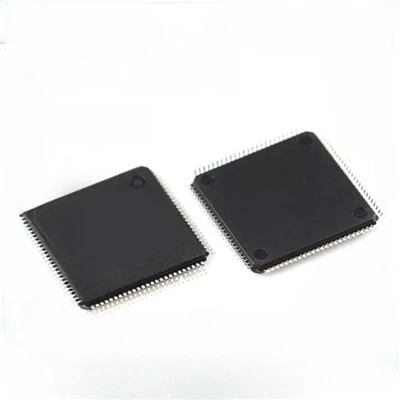
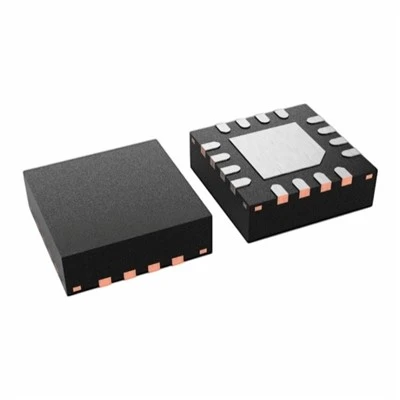
Introduction to RF amplifier chip
In various wireless communication devices, the RF link is central to signal transmission quality, with the RF amplifier chip playing a critical role in the initial stage of signal amplification. Wireless signals captured from the air by an antenna are often extremely weak-far below the minimum levels required for subsequent circuit processing. The RF amplifier boosts the power of these weak input signals while minimizing self-generated noise and avoiding signal distortion. This ensures the processed signal meets the specifications for subsequent transmission, modulation, or broadcasting. From everyday smartphones and in-vehicle navigation systems to base station equipment and satellite receivers, virtually all wireless devices rely on high-performance RF amplifier chips; the chip's performance directly determines the device's signal reception sensitivity and stability.
Key Specifications of RF amplifier chip
In terms of core specifications, the RF amplifier chip delivers a power gain of 16.9 dB, boosting weak satellite signals to levels suitable for processing by downstream baseband chips. It also boasts a noise figure as low as 0.85 dB, indicating minimal self-generated noise that ensures the weak navigation signals are not obscured.
RF amplifier chip linearity
Regarding linearity, the chip features an input-referred 1 dB compression point of -10.2 dBm and an input third-order intercept point (IIP3) of -5.4 dBm. These specifications allow the navigation receiver to maintain its sensitivity even in environments with strong interfering signals in adjacent cellular frequency bands. This ensures that the desired signal is not overwhelmed by strong interference from nearby bands, meeting the operational demands of automotive and portable devices in complex electromagnetic environments. Power Consumption and Functional Design
Specific model of the RF amplifier chip
Regarding power supply, the TRF3302-Q1 supports a single supply voltage ranging from 1.8V to 3.3V. This compatibility with the standard supply voltages used in most portable electronic devices eliminates the need for additional voltage conversion circuitry, thereby simplifying the overall design. During normal operation, the chip draws a current of only 4.6mA; this low power consumption results in minimal heat generation, making it an ideal choice for applications with strict power and thermal management requirements-such as wearable navigation devices and compact automotive receiver modules.
Additionally, the chip features an enable pin compatible with digital logic levels. This allows the device to be powered down when not in use, further reducing overall system power consumption and extending the battery life of portable devices, while also enabling the host controller to flexibly manage the amplifier's operational state.
RF amplifier chip Parameters
|
Frequency (max) (MHz) |
1630 |
|
Frequency (min) (MHz) |
1165 |
|
Gain (typ) (dB) |
16.9 |
|
Noise figure (typ) (dB) |
0.85 |
|
OIP3 (typ) (dBm) |
11.5 |
|
P1dB (typ) (dBm) |
6.7 |
|
Frequency of harmonic distortion measurement (MHz) |
1575 |
|
Current consumption (mA) |
4.6 |
|
Power consumption (typ) (W) |
0.0115 |
|
Operating temperature range (°C) |
-40 to 125 |
|
Rating |
Automotive |
|
Output enable |
Yes |
Hot Tags: rf amplifier chip, China rf amplifier chip manufacturers, suppliers, Audio Amplifier Chip, Fully Differential Amplifier Chip, Instrumentation Amplifier Chip, Operational Amplifier Chip, PGAs And VGAs Chip, RF Amplifier Chip