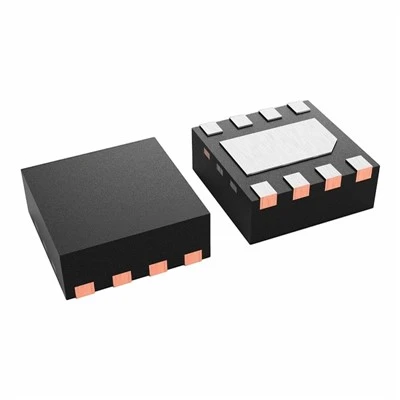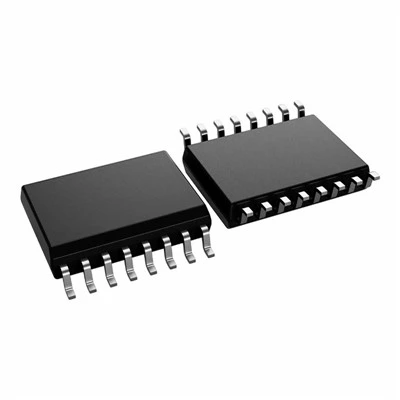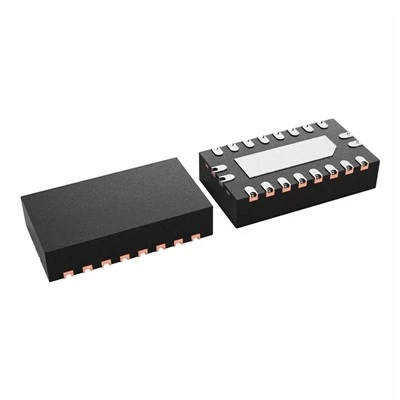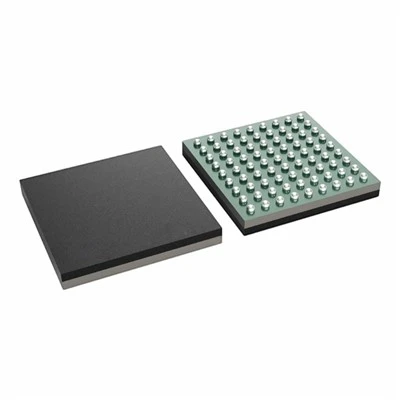
Introduction to Ethernet PHY ICs
The Ethernet PHY ICs is the core chip in the Ethernet communication architecture that is responsible for processing physical-layer signal transmission. It acts as the critical interface connecting the data link layer logic to the actual transmission medium. Its core functions include converting digital bitstreams into analog signals that can be transmitted over physical media, and restoring received analog signals back to digital bitstreams. As such, it is an indispensable foundational component for realizing end-to-end Ethernet communication.
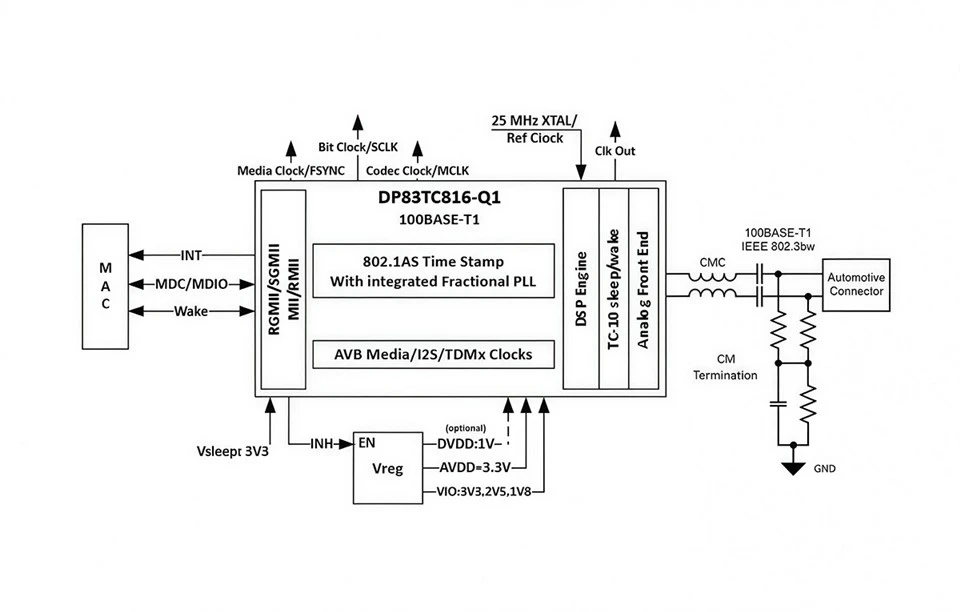
In the OSI seven-layer network model, PHY corresponds to the lowest layer, the physical layer, while MAC (Media Access Control) corresponds to the media access control sublayer of the data link layer. The two components typically cooperate to implement Ethernet communication: the MAC transmits parallel data to be sent to the PHY, which converts the parallel data into serial signals. After encoding and modulation, the signals are transmitted over transmission media such as twisted-pair cables and optical fibers. When receiving data, the PHY acquires analog signals from the transmission medium, completes clock recovery, signal decoding and analog-to-digital conversion to restore the serial digital bitstream, then converts the bitstream into parallel data and delivers it to the MAC for processing. Communication between the two is generally implemented via standard interfaces, with common interfaces including MII, GMII, RGMII, SGMII and XGMII. Different interfaces correspond to different Ethernet rate adaptation requirements.
Ethernet PHY ICs Core Functions
The core functions of PHY are all centered on physical signal processing: First is the encoding and decoding function. Ethernet standards define specific line coding schemes: for example, 4B/5B coding is commonly used for Fast Ethernet, 8B/10B coding is commonly used for Gigabit Ethernet, and 64B/66B coding is adopted for 10 Gigabit and higher-speed Ethernet. The PHY is required to encode the raw data delivered by the MAC in accordance with the coding rules, to ensure that the signal carries synchronous clock information and avoid clock out-of-sync at the receiver caused by consecutive identical bits. The receiver then decodes the signal accordingly to restore the original data. Second is analog-to-digital/digital-to-analog conversion and signal driving: the transmitting end converts the digitally encoded signal into an analog signal that meets the transmission level requirements, and drives the signal to propagate through the transmission medium; the receiving end performs amplification, equalization and filtering processing on the received attenuated analog signal, then samples and converts it into a digital signal. In addition, PHY is equipped with an auto-negotiation function, which is one of the core characteristics of Ethernet. PHY can automatically exchange information with the PHY of the peer device to negotiate the highest operating rate and duplex mode (full-duplex/half-duplex) supported by both parties, and can automatically adapt to the optimal communication parameters without manual configuration. Meanwhile, PHY also supports link status detection, which can judge the connection status of the cable and the connectivity of the link in real time, and report the link status information to the host system.
Ethernet PHY ICs Core Functions
The DP83826Ax delivers ultra-low deterministic latency and low power consumption, while supporting 10BASE-Te and 100BASE-TX Ethernet protocols, which meets the strict requirements of real-time industrial Ethernet systems. This device integrates hardware strapping to achieve fast link establishment, supports fast link loss detection mode, and provides a dedicated reference CLKOUT for clock synchronization of other system modules.
It provides two configurable working modes: "BASIC" standard Ethernet mode, which adopts a general-purpose Ethernet pin definition; and "ENHANCED" Ethernet mode, which supports standard Ethernet and is compatible with a variety of industrial Ethernet fieldbus applications through additional functions and hardware strapping configurations.
Ethernet PHY parameters
The Ethernet PHY ICs parameters are as follows:
|
Datarate (Mbps) |
10/100 |
|
Interface type |
MII, RMII |
|
Rating |
Catalog |
|
Number of ports |
Single |
|
Features |
Cable diagnostics, EEE, EtherCAT, Profinet, Single supply, WoL |
|
I/O supply voltage (typ) (V) |
1.8, 3.3 |
|
Operating temperature range (°C) |
-40 to 105 |
|
ESD HBM (kV) |
5 |
Hot Tags: ethernet phy ics, China ethernet phy ics manufacturers, suppliers, ethernet ics, Ethernet PHY ICs, HDMI DisplayPort And MIPI ICs, IO Link And Digital I O, Multi Switch Detection Interface ICs, Multiplexer Buffer Chips