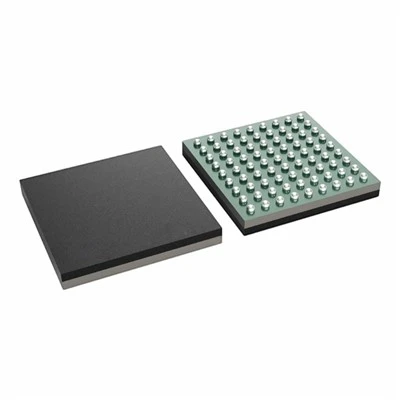
Introduction to USB Bridge Controllers and Multiplexers
USB redrivers-also known as USB repeater drivers or signal buffers-are signal conditioning devices designed to address attenuation and interference issues during USB signal transmission. The USB protocol imposes strict limits on transmission distance and the number of connectable nodes; for instance, the maximum transmission distance under the USB 2.0 standard is typically no more than 5 meters, while high-speed USB 3.0/3.1 is limited to around 3 meters without signal amplification. USB redrivers are employed when applications require exceeding these distance limits or when signal strength is insufficient due to an excessive number of devices on the bus.
Key Functions of USB Bridge Controllers and Multiplexers
Their primary function is to reshape and amplify input USB differential signals before driving the output. By correcting signal distortion caused by line loss and interference and compensating for signal power loss, they extend the USB bus's transmission range and enhance its load-driving capability, ensuring the proper operation of multiple downstream USB devices. Depending on integration levels and application scenarios, USB redrivers range from single-channel units to multi-channel integrated devices; they are suitable for consumer applications like industrial USB bus extenders and external USB docking stations, as well as for demanding environments such as automotive USB systems and industrial control equipment where signal stability is critical. Mainstream products support the data rates of their respective USB versions, and some high-performance models incorporate features like ESD protection and hot-swap protection to further enhance system reliability.
A USB multiplexer (or MUX) is a logic device capable of selecting one signal from multiple inputs and routing it to a designated output channel; such devices are widely used in fields including communications, computer interfaces, and signal processing.
USB Bridge and Multiplexer Operational Logic
Its core operating logic involves using control-side selection signals to switch connections between various input channels and the output. Essentially, it facilitates signal path switching, helping to reduce the number of cables, interfaces, or backend processing modules required, thereby improving hardware resource utilization. Multiplexers are commonplace in USB circuit designs; for example, many multi-input USB-C interfaces utilize multiplexers to switch signal paths between DisplayPort (DP) video, USB data, and charging signals, or to allow multiple USB input sources to share a single host interface. The TUSB1146 is a VESA USB Type-C™ Alt Mode redriver switch that supports USB 3.2 data rates up to 10 Gbps and DisplayPort 2.0 data rates up to 10 Gbps for downstream-facing ports (hosts). The device supports configurations C, D, and E in accordance with the VESA DisplayPort Alt Mode standard over USB Type-C. This linear redriver is protocol-agnostic and also supports other USB Type-C Alt Mode interfaces, such as HDMI Alt Mode.
Specific models of USB adapter drivers and multiplexers
The TUSB1146 features innovative adaptive receiver equalization (AEQ) capabilities. The AEQ function automatically determines the optimal ISI compensation settings between the USB device and the TUSB1146. By identifying the optimal settings, AEQ significantly enhances interoperability between the USB host and the USB device. The TUSB1146 operates from a single 3.3V power supply and supports both commercial and industrial temperature ranges.
USB Bridge and Multiplexer Parameters
|
Type |
Active mux |
|
Function |
Type-C |
|
USB speed (Mbps) |
10000 |
|
Configuration |
Alternate mode / Source |
|
Features |
Adaptive or fixed equalization for USB DFP |
|
Rating |
Catalog |
|
Operating temperature range (°C) |
-40 to 85 |
|
ESD HBM (typ) (kV) |
2 |
|
Bandwidth (MHz) |
10000 |
Hot Tags: usb redriver and multiplexer, China usb redriver and multiplexer manufacturers, suppliers, IO Link And Digital I O, RS 232 Transceivers, USB Hubs Controller, USB Port Protection ICs, USB Redriver And Multiplexer, USB Type C And USB Power Delivery ICs