Basic function and positioning of down-conversion mixer
The down-conversion mixer is a core nonlinear frequency-conversion component in RF receiver systems. Its primary function is to perform nonlinear mixing between the high-frequency RF signal received by the antenna and the local oscillator (LO) signal, outputting a fixed intermediate frequency (IF) signal at a lower frequency. This process lays the foundation for subsequent signal filtering, amplification, and demodulation, making the mixer an indispensable unit in superheterodyne receiver architectures.
Key performance indicators and implementation architectures of down-conversion mixers
As a core module of the receive chain, several key performance indicators of the down-conversion mixer directly determine the overall performance of the receiver system: First is conversion gain-the ratio of output IF signal power to input RF signal power-which can be categorized into conversion voltage gain and conversion power gain; higher gain minimizes the impact of noise from backend circuitry on the system's overall signal-to-noise ratio (SNR), thereby helping to improve receiver sensitivity. Second is the noise figure, a measure of the additional noise introduced during the mixing process; a lower noise figure better preserves the SNR of weak input signals, which is crucial for low-noise reception scenarios. Third is isolation, referring to the ability to suppress signal leakage between ports-specifically the isolation from the LO port to the RF port and from the LO port to the IF port; insufficient isolation allows LO signal leakage to interfere with the received signal, potentially causing saturation in backend circuits or interference with other communication channels. Fourth is linearity, typically characterized by the 1-dB compression point and the third-order intercept point (IP3), reflecting the mixer's ability to handle large signals without severe distortion; higher linearity prevents intermodulation distortion caused by strong interferers from blocking the receive channel, thereby enhancing the system's interference immunity. Fifth is the standing wave ratio (SWR), which reflects the impedance matching between the mixer's input/output ports and the transmission lines; better matching results in lower signal reflection loss and higher energy utilization efficiency. In terms of implementation architecture, common down-conversion mixers fall into two main categories: passive mixers and active mixers. Passive mixers are typically constructed using diodes, diode bridges, or switching MOSFET arrays; they rely on the inherent nonlinearity of the components to perform frequency mixing without requiring an external DC power supply. While they offer advantages such as wide dynamic range, low noise, and high operating frequencies, they suffer from conversion loss-necessitating a subsequent amplifier to compensate for power reduction-and are commonly used in applications like high-frequency microwave reception and broadband communication. Active mixers, conversely, utilize transistors to provide gain; they offer positive conversion gain that can offset noise introduced by downstream circuitry, while also delivering superior port isolation and higher levels of integration, making them ideal for monolithic RF transceiver chips fabricated using CMOS processes. Their drawbacks include a slightly lower dynamic range compared to passive mixers and somewhat inferior high-frequency noise performance.
Practical application scenarios and development trends of down-conversion mixers
In practical applications, down-conversion mixers are ubiquitous in fields requiring RF signal reception. In wireless communications-ranging from 5G base stations and smartphones to Wi-Fi and Bluetooth devices-receiver chains rely on these mixers to convert high-frequency carrier signals into intermediate frequency (IF) or baseband signals suitable for processing. In radar and electronic warfare systems, wideband down-conversion mixers convert detection and reconnaissance signals from various frequency bands into a unified IF, enabling the monitoring and analysis of wideband signals. Similarly, in broadcast television reception and satellite navigation/positioning systems, down-conversion mixers serve as core components for signal down-conversion, facilitating subsequent demodulation and decoding. As communication technology advances toward higher frequency bands and greater integration, down-conversion mixers are continuously evolving to become wider-band, more compact, and characterized by low power consumption and high linearity, thereby meeting the application demands of next-generation wireless systems.
Specific model of the down-conversion mixer
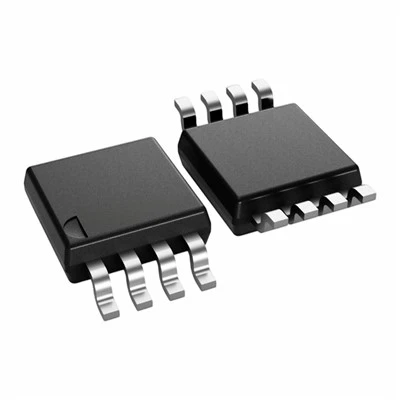
The TRF37x32 is a wideband, dual-channel down-converting mixer featuring integrated IF amplifiers. The device utilizes integrated baluns for single-ended RF and LO inputs. Operating in an open-collector topology, the IF amplifiers function within the 30 MHz to 600 MHz range, supporting a variety of IF frequencies and bandwidths. The TRF37x32 delivers excellent mixer linearity and noise performance, along with robust channel-to-channel isolation, making it suitable for a wide range of applications. In addition to its low-power design, the device offers a low-power mode option for power-sensitive applications. Each channel can be independently powered down with rapid response times, making the device ideal for Time Division Duplex (TDD) applications.
Down-conversion mixer parameters
|
Number of channels |
2 |
|
RF frequency (min) (MHz) |
400 |
|
RF frequency (max) (MHz) |
1700 |
|
IF frequency (min) (MHz) |
30 |
|
IF frequency (max) (MHz) |
600 |
|
Conversion gain (typ) (dB) |
9.6 |
|
Noise figure (typ) (dB) |
9.6 |
|
IIP3 (typ) (dBm) |
26 |
|
OIP3 (typ) (dBm) |
35.6 |
|
OIP2 (typ) (dBm) |
65 |
|
IP1dB (typ) (dBm) |
11 |
|
Integrated VCO |
No |
|
LO input level (typ) (dBm) |
0 |
|
LO input frequency (min) (MHz) |
600 |
|
LO input frequency (max) (MHz) |
1400 |
|
Current consumption (mA) |
280 |
|
Power consumption (typ) (mW) |
920 |
|
Power-down current |
Yes |
|
Operating temperature range (°C) |
-40 to 85 |
|
Rating |
Catalog |
Hot Tags: downconverting mixers, China downconverting mixers manufacturers, suppliers, Downconverting Mixers, IQ Demodulators, IQ Signal Demodulator, rf, RF Power Detectors