Basic Overview of IQ Modulators
IQ modulators are core electro-optic or electrical signal modulation devices in the fields of modern optical communication, microwave RF, and signal processing. Based on the principle of quadrature amplitude modulation, they enable the control of both the phase and amplitude of a carrier signal. By superimposing two independent orthogonal baseband signals onto the same carrier, they significantly enhance spectrum utilization and information transmission capacity, making them indispensable components in cutting-edge fields such as high-speed communication, LiDAR, and quantum optics.
Operating Principles of IQ Modulators
In terms of operating principles, IQ modulation relies on the independence of orthogonal signals. In electrical systems-specifically RF IQ modulators-the carrier is typically split into an "I" (In-phase) path and a "Q" (Quadrature-phase) path, with a 90° phase difference between them. Each path carries independent baseband data to modulate the carrier's amplitude; upon recombination, a modulated signal containing distinct amplitude and phase information is produced. Theoretically, this allows for the implementation of arbitrary constellation diagrams and supports high-order modulation formats such as QPSK, 16QAM, and 64QAM. Optical IQ modulators, which are currently the most widely used type, typically utilize a design based on the Pockels effect in lithium niobate crystals. They generally consist of two parallel Mach-Zehnder modulators (MZMs) for intensity modulation integrated onto a single substrate, with a 90° optical phase shifter incorporated into one of the branches. An input laser beam is split into two equal-power paths, each entering one of the MZMs. Baseband electrical signals from the I and Q paths drive the respective MZMs to modulate the optical intensity. The optical output from the Q path undergoes an additional 90° phase shift relative to the I path. Finally, the two optical beams are combined to produce the optical IQ modulated signal, thereby completing the mapping from the electrical domain to the optical domain.
Core Advantages of IQ Modulators
Regarding their core advantages, the primary value of IQ modulators lies in their ability to enhance spectral efficiency. In traditional binary keying modulation, a single symbol carries only one bit of information. In contrast, IQ modulation employs information multiplexing across two orthogonal dimensions; a single symbol in N-bit quadrature amplitude modulation can carry 2N bits of information. Consequently, within the same bandwidth, it can transmit several times the amount of data compared to traditional modulation methods, perfectly meeting the demands for high transmission rates in modern high-speed communication systems. At the same time, IQ modulators offer the flexibility to generate modulated signals with arbitrary phase and amplitude, enabling them to accommodate complex communication protocols and signal processing requirements, as well as to compensate for signal impairments-such as phase shifts and amplitude distortions-incurred during link transmission.
Key Application Scenarios of IQ Modulators
Regarding key application scenarios, lithium niobate IQ modulators serve as core components in 100G, 400G, 800G, and even higher-speed optical transmission modules for long-haul, high-capacity fiber-optic systems, supporting high-speed signal transmission in 5G/6G transport networks and data center interconnects. In the field of microwave photonics, IQ modulators enable photonic-assisted terahertz signal generation and arbitrary microwave waveform synthesis, providing an optical pathway for wideband RF signal processing. In laser detection and measurement, they facilitate the generation of specially modulated laser signals-such as linear frequency-modulated (LFM) and phase-coded signals-thereby enhancing the ranging and imaging resolution of LiDAR systems. Furthermore, in cutting-edge research areas like quantum communication, coherent optical communication, and optical frequency comb generation, high-performance IQ modulators are essential tools for complex optical field manipulation.
Technological Development Trends of IQ Modulators
Technological development for IQ modulators focuses primarily on enhancing performance and reducing size. While traditional bulk lithium niobate IQ modulators are bulky and require high driving voltages, the recent emergence of thin-film lithium niobate integrated IQ modulators has significantly reduced device dimensions, lowered driving power consumption, and increased modulation bandwidth, thereby accelerating their adoption in high-speed, high-density optoelectronic systems. Beyond the lithium niobate platform, integrated IQ modulation solutions based on materials such as silicon photonics and indium phosphide are also being developed, with the field as a whole trending toward higher integration and lower costs.
Specific model of the IQ modulator
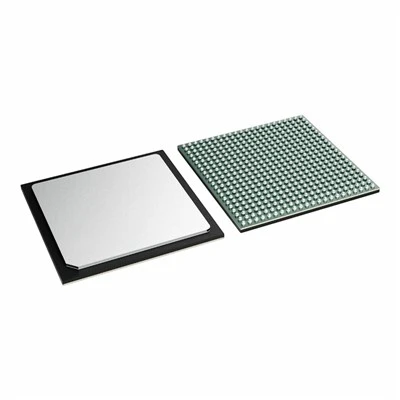
The TRF37T05 is a low-noise direct quadrature modulator with exceptional TDD performance. It is capable of converting complex modulated signals from baseband or IF directly up to RF. The TRF37T05 is a high-performance, superior-linearity device that is ideal to up-convert to RF frequencies of 300 MHz (Note: appropriate matching network is required for optimal performance at 300 MHz) through 4 GHz. The modulator is implemented as a double-balanced mixer.
The RF output block consists of a differential-to-single-ended converter that is capable of driving a single-ended 50-Ω load. The TRF37T05 requires a 0.25-V common-mode voltage for optimum linearity performance. The TRF37T05 also provides a fast power-down pin that can be used to reduce power dissipation while maintaining optimized adjusted carrier feed-through performance in TDD applications.
IQ Modulator Parameters
|
Frequency (min) (MHz) |
300 |
|
Frequency (max) (MHz) |
4000 |
|
I/Q input common-mode voltage (typ) (V) |
0.25 |
|
PLL/VCO |
No |
|
P1dB (typ) (dBm) |
13 |
|
OIP3 (typ) (dBm) |
30 |
|
Noise floor (typ) (dBm/Hz) |
-160 |
|
Unadjusted carrier suppression (typ) (dBm) |
-45 |
|
Unadjusted sideband suppression (typ) (dBc) |
-45 |
|
Rating |
Catalog |
|
Operating temperature range (°C) |
-40 to 85 |
Hot Tags: iq demodulators, China iq demodulators manufacturers, suppliers, Downconverting Mixers, IQ Demodulators, IQ Signal Demodulator, rf, RF Power Detectors