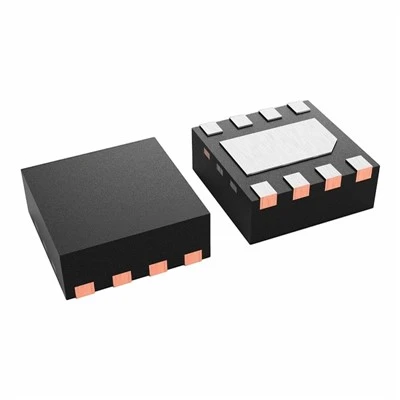
Basic definition and core function of RF transceiver
An RF transceiver is a core component in wireless communication that integrates the two primary functions of RF transmission and reception. It enables the mutual conversion between digital signals and RF wireless signals, serving as the fundamental hardware unit for signal exchange in various wireless communication devices.
Internal functional architecture and design characteristics of RF transceiver
In terms of functional architecture, the transmitter chain of an RF transceiver processes low-frequency digital baseband signals output by the baseband chip, performing modulation, up-conversion, and power amplification, to convert the signals into high-frequency RF signals compliant with specific frequency band specifications, before radiating them into free space via an antenna. The receiver chain performs the reverse process: it captures high-frequency RF signals received by the antenna from space, subjects the signals to low-noise amplification, down-conversion, filtering and demodulation, and ultimately restores them to low-frequency baseband signals that can be identified and processed by the baseband chip, thereby completing the signal transmission cycle for bidirectional communication. Modern RF transceivers generally adopt highly integrated designs, integrating previously discrete modules including filters, amplifiers, mixers, oscillators and power controllers into a single chip, which is referred to in the industry as an RF transceiver chip.This design significantly reduces hardware size, design complexity, and power consumption, meeting the application requirements of today's miniaturized smart devices.
Typical Application Fields and Industry Scenarios of RF Transceiver
Regarding application areas, RF transceivers cover virtually all scenarios requiring wireless connectivity.In consumer electronics, RF transceivers function as the core components that enable wireless networking for devices including smartphones, Bluetooth headsets, smartwatches, and Wi-Fi routers, and support diverse communication standards such as 2G/3G/4G/5G mobile communication, Bluetooth, and Wi-Fi. In the Industrial Internet of Things (IIoT), various sensor nodes and industrial wireless gateways rely on industrial-grade RF transceivers to realize low-power, long-distance data transmission. In the field of automotive electronics, specialized RF transceivers provide signal interaction support for in-vehicle communication, vehicle-to-infrastructure coordination in autonomous driving, Bluetooth car keys, and V2X devices. Furthermore, in fields that require extremely high performance reliability, such as satellite communication, medical electronics, and aerospace, customized RF transceivers act as critical components to guarantee the stable operation of wireless communication.
Specific model of the RF transceiver
The AFE7922 is a high-performance, wide-bandwidth, multi-channel transceiver integrating two RF-sampling transmit chains and two RF-sampling receive chains. The high dynamic range of the transmit and receive chains enables the device to generate and receive 3G, 4G, and 5G signals in wireless base stations, while its wide-bandwidth capability suits multi-band 4G and 5G base station applications.
The TX signal path supports interpolation and digital up-conversion (DUC) options, providing a signal bandwidth of up to 400 MHz per TX channel. The DUC output drives a 12 GSPS DAC (digital-to-analog converter), with a mixed-mode output option that enhances operation in the second Nyquist zone. The DAC output includes a variable gain amplifier (TX DSA) featuring a 40 dB range with 1 dB analog and 0.125 dB digital step sizes.
Each receive chain incorporates a DSA (digital step attenuator) with a 25 dB range, followed by a 3 GSPS ADC (analog-to-digital converter). Each receiver channel features an analog peak power detector and various digital power detectors to support external or internal autonomous automatic gain control (AGC), as well as an RF overload detector to ensure device reliability. Flexible decimation options allow for signal bandwidth optimization, enabling up to 400 MHz per RX channel.
RF Transceiver Parameters
|
Applications |
Wireless infrastructure |
|
Number of TXs and RXs |
2 TX, 2 RX |
|
RF frequency (max) (MHz) |
6000 |
|
RF frequency (min) (MHz) |
400 |
|
Number of DUCs per TX |
2 |
|
Number of DDCs per RX |
2 |
|
Operating temperature range (°C) |
-40 to 85 |
|
Rating |
Catalog |
Hot Tags: rf transceivers, China rf transceivers manufacturers, suppliers, Long distance RF Receivers, Lora RF Transmitters, RF Power Detectors, RF Transceivers, rf transceivers receivers transmitters