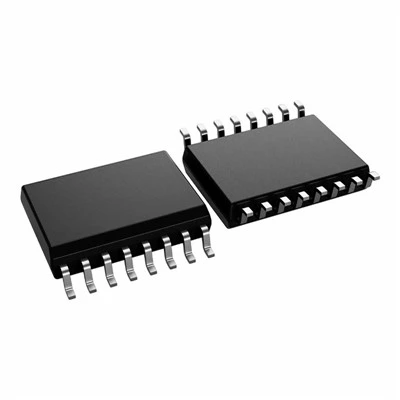
Introduction to Isolation Amplifier Chip
Isolation Amplifier Chip are specialized integrated circuits that combine signal amplification with electrical isolation. They amplify input signal amplitudes while simultaneously breaking the DC path between the input and output sides, thereby blocking harmful electrical pathways such as common-mode interference and high-voltage circulating currents. These chips are widely used in sectors requiring high standards for electrical safety and signal quality, including industrial control, power monitoring, medical equipment, and new energy.
The core architecture of an isolated amplifier chip consists of three sections: the input signal conditioning unit, the electrical isolation unit, and the output signal amplification unit. Upon entering the chip, the input signal undergoes filtering, impedance matching, and preliminary processing in the input conditioning unit; it is then coupled from the input side to the output side via the electrical isolation unit; finally, the output amplification unit precisely amplifies the signal before outputting it. The electrical isolation unit is the key component that distinguishes isolated amplifiers from standard operational amplifiers.
Driven by the rapid development of the Industrial Internet and the new energy sector, market demand for isolated amplifier chips continues to grow. The industry is evolving in four main directions: first, increasing integration-with more products incorporating functions like isolated power supplies and A/D conversion to simplify system design; second, improving performance and precision-where new modulation/demodulation technologies reduce nonlinearity errors and temperature drift to meet higher measurement accuracy requirements; third, shrinking package sizes-making them compact enough for portable devices and high-density circuit boards; and fourth, reducing power consumption-making them better suited for battery-powered portable devices and IoT node applications.
Specific model of the isolation amplifier chip
The AMC0x30R is a precision Isolation Amplifier Chip featuring a ±1V high-impedance input interface and a ratiometric single-ended output. Its high-impedance input is specifically optimized for connection to high-impedance resistive voltage dividers or other voltage signal sources with high output impedance. The isolation barrier separates system components operating at different common-mode voltage levels while offering robust electromagnetic interference (EMI) immunity. This isolation barrier is certified; the DWV package provides reinforced isolation up to 5kVRMS, while the D package provides basic isolation up to 3kVRMS (tested for 60 seconds). The AMC0x30R outputs a single-ended signal proportional to the input voltage, with the full-scale output range determined by the voltage applied to the REFIN pin. Designed for direct connection to an ADC input, the device allows for easy matching of the ADC's dynamic input voltage range simply by connecting the REFIN pin to the same reference voltage used by the ADC.
The AMC0x30R is available in 8-pin wide-body and narrow-body SOIC packages and is rated for an operating temperature range of –40°C to +125°C.
Specific model of the isolation amplifier chip
|
Device type |
Voltage sensing |
|
Output type |
Single-ended |
|
Peak-to-peak input voltage range (V) |
1 |
|
Isolation rating |
Basic |
|
Withstand isolation voltage (VISO) (Vrms) |
3000 |
|
Working isolation voltage (VIOWM) (Vrms) |
800 |
|
Transient isolation voltage (VIOTM) (VPK) |
4250 |
|
CMTI (min) (kV/µs) |
150 |
|
Creepage (min) (mm) |
4 |
|
Clearance (min) (mm) |
4 |
|
Input offset (±) (max) (V) |
0.0015 |
|
Input offset drift (±) (typ) (µV/°C) |
2 |
|
Rating |
Catalog |
|
Operating temperature range (°C) |
-40 to 125 |
Hot Tags: isolation amplifier chip, China isolation amplifier chip manufacturers, suppliers, Digital Isolator Chip, Isolated Comparator Chip, Isolated Interface ICs, Isolation Amplifier Chip, Power Supply Chips For Signal Isolators, Solid state Relay Chip