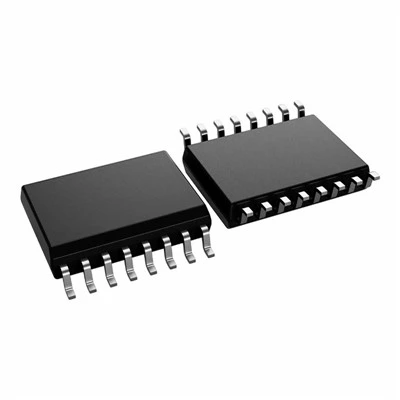
Introduction to Optocoupler Simulator chip
An Optocoupler Simulator chip is an electronic circuit simulation tool designed specifically for optocouplers. It is primarily used during the circuit design phase to model the electrical characteristics, signal transmission behavior, and fault modes of optocoupler devices. It enables engineers to verify the soundness of a circuit design and perform functional testing and performance analysis without the need to build actual hardware circuits.
An Optocoupler Simulator chip is a semiconductor device that transmits electrical signals using light as the medium. Its core structure consists of three parts: a light source, an optical channel, and a light receiver. It provides electrical isolation between the input and output sides and is widely used in applications such as level shifting, isolated driving, and noise suppression. Due to the isolation characteristics of optocouplers, there is a non-linear relationship between input and output parameters, and performance is significantly influenced by factors such as temperature, current, and aging. Accurately predicting actual circuit performance using only formulas is difficult; optocoupler simulators effectively address this challenge.
Specific model of the Optocoupler Simulators
The OPT4060 is a single-chip, high-resolution color sensor capable of measuring four channels, each with a specifically designed spectral response. Three of the four channels feature peak spectral responses at red, green, and blue wavelengths, while the fourth channel offers a broadband spectral response. By taking measurements from these channels, key characteristics of the lighting environment-such as (i) light intensity (lux) and (ii) color-can be extracted. The OPT4060 is housed in a compact SOT-5X3 package.
The OPT4060 features an optional addressing scheme that allows up to four devices to operate on a shared I2C bus. The spectral responses of these channels are specifically tuned for color detection while strongly suppressing wavelengths far from their respective peaks, particularly in the NIR (850 nm and 940 nm) region. These filters utilize advanced filtering technology to deliver excellent performance, even at high angles of incidence.
The optical filters integrated into the OPT4060 provide robust infrared (IR) rejection, helping to maintain high accuracy even when the sensor is placed behind dark glass-a common requirement in the industrial design of end products for aesthetic reasons.
The OPT4060 is designed for systems requiring illuminance level detection, enhancing the user experience by providing information on both light intensity and color. The OPT4060 can be configured to operate with optical conversion times ranging from 600µs to 800ms (in 12 steps per channel), offering system flexibility tailored to application needs. The conversion time comprises both the optical acquisition time and the ADC conversion time. Measurement resolution is determined by both light intensity and acquisition time, enabling the effective measurement of light intensity changes as low as 2.15mlux.
Digital operation offers flexibility for system integration; measurements can be performed continuously or triggered on demand via register writes or a hardware pin. The device features threshold detection logic, allowing the processor to enter a sleep state until the sensor detects a relevant wake-up event and signals it via the interrupt pin.
Illuminance levels are reported as a digital output via an I2C- and SMBus-compatible two-wire serial interface.
The OPT4060 combines low power consumption with low supply voltage operation, helping to extend battery life in battery-powered systems.
Optocoupler Simulators Parameters
|
Rating |
Catalog |
|
Applications |
Enterprise, Industrial, PC |
|
Operating temperature range (°C) |
-40 to 85 |
|
Features |
High precision, High speed |
Hot Tags: optocoupler simulator chip, China optocoupler simulator chip manufacturers, suppliers, Isolated Interface ICs, Isolated Power Module, Isolation Amplifier Chip, isolation chip, Optocoupler Simulator Chip, Solid state Relay Chip