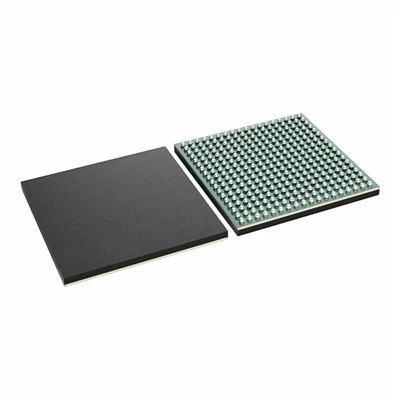
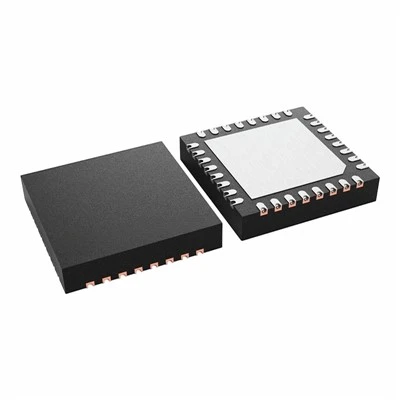
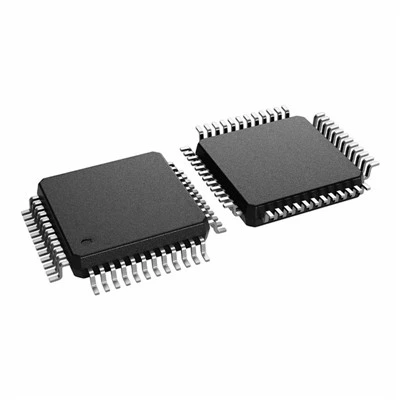
Introduction to automation MCU chip
Automation MCU chip designed for the automation sector are microcontroller units tailored for applications such as industrial automation, smart homes, and intelligent manufacturing. Integrating a processor core, memory, various peripheral interfaces, and analog-to-digital conversion modules, they perform the core functions of sensing, computation, control, and communication within automation systems-serving as the veritable "brain" of automation equipment.
They typically integrate specialized hardware modules (e.g., hardware capture, PWM output, and high-speed analog-to-digital conversion) to eliminate the latency associated with purely software-based processing and to meet stringent real-time control requirements. In terms of functional architecture, automation MCUs typically integrate specialized resources tailored to automation scenarios. At the core level, they predominantly utilize the ARM Cortex-M series architecture, with products ranging from the Cortex-M0/M0+ (for low-end sensor nodes) to the Cortex-M3/M4/M7 (for mid-to-high-performance motion control and multitasking). Computing power spans from a few DMIPS to over a thousand DMIPS, accommodating requirements ranging from simple on/off control to complex algorithmic processing. Regarding memory, they integrate on-chip Flash and RAM ranging from a few kilobytes to several megabytes, meeting the needs for program storage and sensor data buffering; some high-end products also support external memory expansion to handle larger-scale program and data storage requirements. At the peripheral interface level, automation MCUs almost universally integrate communication and interface resources common to automation applications: analog components include multi-channel ADCs (12-bit or higher resolution), analog comparators, and DACs, enabling direct interfacing with sensors providing analog outputs such as temperature, pressure, and position; digital components include multiple GPIOs and PWM outputs, capable of directly driving actuators like relays, stepper motors, and servo motors. In terms of communication interfaces, beyond standard UART, SPI, and I2C, they widely support industrial bus protocols common in the automation sector-such as CAN/LIN, PROFINET, EtherCAT, and Modbus-while some products integrate Ethernet PHY, Bluetooth, and Wi-Fi modules to support wired and wireless networking, thereby meeting the needs for device interconnection and data uploading in the Industrial IoT (IIoT) landscape.
Specific model numbers of automation MCU chip
The AM263x Sitara™ Arm® microcontroller is designed to meet the complex real-time processing requirements of next-generation industrial and automotive embedded products. The AM263x MCU family comprises multiple pin-to-pin compatible devices featuring up to four 400MHz Arm® Cortex®-R5F cores. The Arm® R5F subsystems can be programmed to operate in lockstep or dual-core modes, enabling various functional safety configurations. The industrial communication subsystem (PRU-ICSS) supports integrated industrial Ethernet communication protocols (such as PROFINET®, EtherNet/IP®, EtherCAT®, and others), standard Ethernet connectivity, and custom I/O interfaces. This series is designed for future motor control and digital power applications utilizing advanced analog sensing and digital actuation modules.
Multiple R5F cores are organized into a cluster subsystem featuring 256KB of shared Tightly Coupled Memory (TCM) and 2MB of shared SRAM, significantly reducing the need for external memory. Reliability is enhanced through extensive ECC implementation across on-chip memory, peripherals, and interconnects. Granular firewalls managed by a Hardware Security Module (HSM) enable developers to meet stringent requirements for safety-critical system designs. The AM263x devices also offer encryption/decryption acceleration and secure boot capabilities.
Automation MCU Chip Specifications
The automation MCU chip are as follows:
|
CPU |
Arm Cortex-R5F |
|
Frequency (MHz) |
400 |
|
RAM (kByte) |
2048 |
|
ADC type |
5 12-bit SAR |
|
Total processing (MIPS) |
0.0004 |
|
Features |
CAN, CAN FD, EnDat 2.2, EtherCAT, EtherNet/IP, Ethernet, External memory interface, Hardware encrpytion (AES/DES/SHA/MD5), I2C, IO-Link, Integrated industrial protocols, Profinet, QSPI, SD/SDIO, SPI, UART |
|
UART |
6 |
|
CAN (#) |
4 (CAN-FD) |
|
PWM (Ch) |
64 |
|
Security |
Cryptographic acceleration, Device lifecycle management, Secure boot, Secure debug, Secure provisioning |
|
Number of ADC channels |
30 |
|
SPI |
5 |
|
Operating temperature range (°C) |
-40 to 105 |
|
Rating |
Catalog |
|
Communication interface |
CAN, CAN-FD, I2C, QSPI, SD/SDIO, SPI, UART |
|
Operating system |
BareMetal (No OS), FreeRTOS, ThreadX |
|
Hardware accelerators |
Trigonometric math accelerator |
|
Edge AI enabled |
Yes |
|
Number of GPIOs |
140 |
Hot Tags: automation mcu chip, China automation mcu chip manufacturers, suppliers, Audio And Radar DSP SoC Chip, Automotive MCU Chip, General purpose MCU Chip, Microcontroller Chip, microcontrollers and processors chip, Sensing MCU Chip