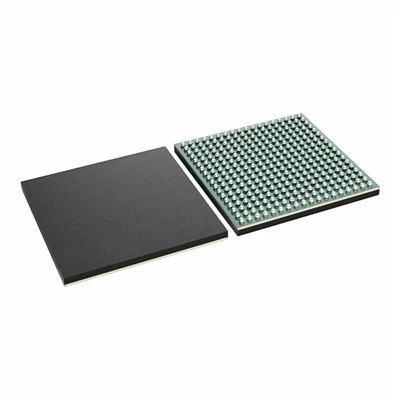
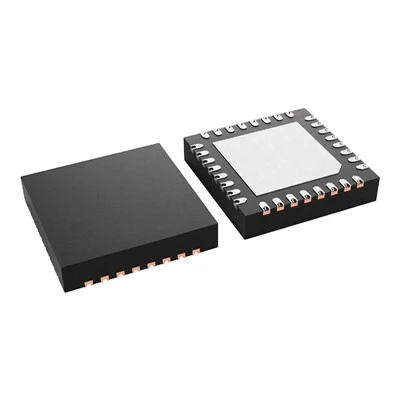
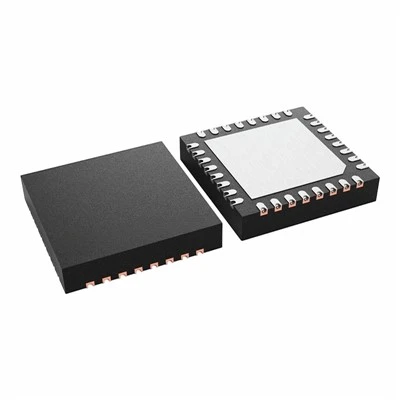
Introduction to Automotive networking SoC chip
Automotive networking SoC chip are designed specifically for intelligent connected vehicle scenarios. Serving as the core computing engine for the vehicle's network architecture, they highly integrate traditional in-vehicle network communication, data exchange, protocol processing, and certain edge computing functions onto a single chip. They provide stable, high-performance computing support for information exchange between electronic control units (ECUs), sensors, and actuators within the vehicle, as well as between the vehicle and the external environment.
Core Functions of Automotive networking SoC chip
The core capability of these Automotive networking SoC chip lies primarily in their integrated support for multi-protocol in-vehicle networks. In addition to compatibility with traditional low-bandwidth automotive buses like CAN FD and LIN, they integrate numerous Gigabit or even 10-Gigabit Ethernet interfaces. Some high-end models also feature built-in high-speed interconnect interfaces such as PCIe and SerDes, enabling them to handle the massive data transmission demands of high-bandwidth sensors-such as cameras, millimeter-wave radars, and LiDAR-characteristic of the intelligent vehicle era, thereby thoroughly overcoming the bandwidth bottlenecks of traditional distributed in-vehicle networks. To meet communication compliance requirements across various scenarios, these chips typically incorporate dedicated protocol acceleration engines for standards like IEEE 802.1p Audio Video Bridging (AVB) and Time-Sensitive Networking (TSN). These engines guarantee microsecond-level network transmission latency, ensuring that critical data-such as that for powertrain control and autonomous driving-experiences no transmission delays.
Functional Safety of Automotive Network SoC Chips
Regarding functional safety, these chips are developed in full compliance with the ISO 26262 standard for automotive functional safety, with most products achieving ASIL-B or higher safety ratings. They feature hardware-level error checking and correction, data link redundancy, and real-time fault diagnosis and isolation mechanisms. Even if anomalies occur in certain pathways, the system can rapidly switch to backup links, ensuring uninterrupted core communication and preventing vehicle-wide safety risks caused by network failures. Furthermore, the chips integrate comprehensive automotive cybersecurity modules-supporting Hardware Security Modules (HSM)-to enable data encryption/decryption, authentication, and intrusion detection, effectively protecting the in-vehicle network against tampering and attacks from external unauthorized intrusions.
Specific Automotive Network SoC Chip Models
The DRA821x processor is based on the Armv8 64-bit architecture and is optimized for gateway systems with cloud connectivity capabilities. System-on-Chip (SoC) designs reduce system-level costs and complexity through integration-specifically by incorporating system MCUs, functional safety and security features, and Ethernet switches capable of high-speed communication. Integrated diagnostic and functional safety features meet ASIL-D and SIL-3 certification requirements. Real-time control and low-latency communication are supported by PCIe controllers and TSN-enabled Gigabit Ethernet switches.
Up to four general-purpose Arm® Cortex®-R5F subsystems can handle simple, time-critical processing tasks, thereby offloading the Arm® Cortex®-A72 cores to focus on advanced and cloud-based applications.
Automotive Networking SoC Specifications
|
CPU |
2 Arm Cortex-A72 |
|
Frequency (MHz) |
2000 |
|
Coprocessors |
4 Arm Cortex-R5F |
|
Protocols |
Ethernet, TSN |
|
PCIe |
1 PCIe Gen 3 |
|
Features |
Networking |
|
Operating system |
AutoSAR, FreeRTOS, INTEGRITY, Linux, QNX, SafeRTOS, VxWorks, u-velOSity |
|
Security |
AutoSAR, FreeRTOS, INTEGRITY, Linux, QNX, SafeRTOS, VxWorks, u-velOSity |
|
Security |
Cryptographic acceleration, Device attestation & anti-counterfeit, Hardware-enforced isolation, Secure boot, Secure debug, Secure storage, Software IP protection |
|
functional safety category |
Functional Safety-Compliant |
|
Rating |
Automotive |
|
Power supply solution |
LP8764-Q1, TPS6594-Q1 |
|
Operating temperature range (°C) |
-40 to 125 |
|
Edge AI enabled |
No |
Hot Tags: automotive networking soc chip, China automotive networking soc chip manufacturers, suppliers, Automotive Driver Assist SoC Chip, General purpose MCU Chip, Microcontroller Chip, Microprocessor And DSP Chip, Multimedia And Industrial Networking SoC Chip, Real-time Digital Power MCU Chip