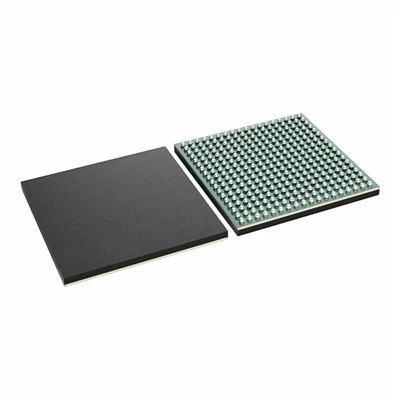
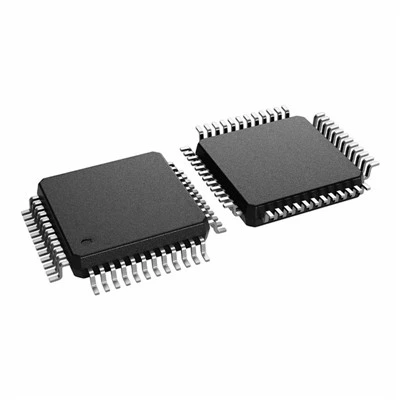
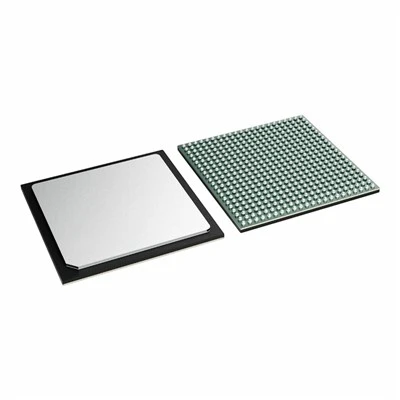
Introduction to Multimedia and industrial networking SoC chip
Multimedia and industrial networking SoC chip are designed for specific applications such as multimedia data processing and industrial field network communication. By highly integrating multiple functional modules-including processor cores, multimedia hardware acceleration units, industrial network protocol processors, and peripheral interfaces-onto a single silicon die, these chips overcome the drawbacks of traditional discrete solutions (such as large size, high power consumption, and poor compatibility) while meeting critical requirements for real-time performance, stability, and functional integration in specialized scenarios. They serve as the core computing foundation for the Industrial Internet and smart multimedia device sectors.
Core Architecture of Multimedia and Industrial Network SoC Chips
In terms of core architecture, these SoCs typically feature a multi-core design; mainstream solutions pair ARM Cortex-A series application processors (handling system scheduling and high-level applications) with Cortex-M series real-time processors (managing low-latency, hard real-time tasks). This heterogeneous architecture effectively balances general-purpose computing capabilities with the real-time demands of industrial environments. To address multimedia processing needs, the chips incorporate dedicated hardware acceleration units-such as video codec engines, Image Signal Processors (ISPs), GPUs, and audio DSPs-capable of independently performing tasks like 4K/8K video encoding/decoding, high-definition image noise reduction and correction, and real-time graphics rendering without relying on external chips, thereby significantly reducing device-level design complexity. Addressing core industrial networking requirements, these SoCs feature built-in hardware modules for industrial network protocols, supporting mainstream industrial real-time Ethernet standards such as PROFINET, EtherCAT, Modbus TCP, and CC-Link IE. Some high-end products also integrate Time-Sensitive Networking (TSN) processing units, achieving microsecond-level end-to-end transmission latency and time synchronization accuracy to meet the deterministic transmission needs of industrial motion control and sensor networking.
Specific model numbers of Multimedia and industrial networking SoC chip
The AM62Px (where "P" denotes an enhanced version) is an extension of the existing low-cost Sitara™ AM62x application processor series, purpose-built for high-performance embedded 3D display applications. Scalable Arm® Cortex®-A53 performance and embedded features-such as support for multi-screen HD displays, 3D graphics acceleration, 4K video acceleration, and extensive peripherals-make the AM62Px ideally suited for a wide range of automotive and industrial applications, including automotive digital instrument clusters, automotive displays, industrial HMIs, and more.
Multimedia and Industrial Network SoC Specifications
The Multimedia and industrial networking SoC chip parameters are as follows:
|
CPU |
2 Arm Cortex-A53, 4 Arm Cortex-A53 |
|
Frequency (MHz) |
1400 |
|
Coprocessors |
1 Arm Cortex-R5F |
|
Graphics acceleration |
1 3D |
|
Display type |
1 DSI, MIPI DPI, OLDI |
|
Protocols |
Ethernet, TSN |
|
Hardware accelerators |
CPU only, Video decode accelerator, Video encode accelerator |
|
Features |
General purpose |
|
Operating system |
Android, Linux |
|
Security |
Secure boot |
|
Rating |
Catalog |
|
Power supply solution |
TPS65224 |
|
Operating temperature range (°C) |
-40 to 125 |
|
Edge AI enabled |
Yes |
Hot Tags: multimedia and industrial networking soc chip, China multimedia and industrial networking soc chip manufacturers, suppliers, Audio And Radar DSP SoC Chip, Automation MCU Chip, Microprocessor And DSP Chip, Multimedia And Industrial Networking SoC Chip, Real time Motor Control, Real-time Digital Power MCU Chip