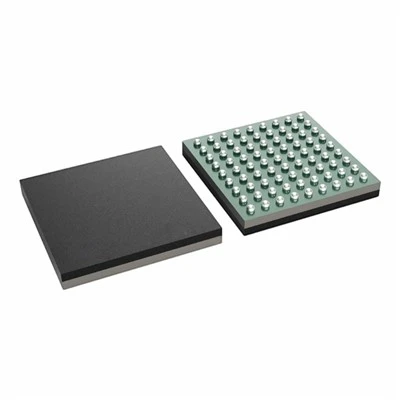
Introduction to Fiber Optic Network ICs
Fiber Optic Network ICs are core chips that enable high-speed, low-power signal processing and transmission within the modern optical communications industry. They serve as critical components bridging fiber-optic link transmission and terminal equipment signal processing, directly determining the transmission capacity, speed, and operational stability of fiber-optic communication networks.
Core IC Functions for Fiber Optic Network ICs
The core functions of fiber optic network ICs span the entire signal processing workflow of optical communications, covering five key areas: optical signal transceiver modulation, electro-optical signal conversion control, high-speed signal equalization and amplification, channel multiplexing/demultiplexing, and protocol processing/network management. In optical transceiver modules, driver ICs provide stable drive current to lasers, adjust optical modulation parameters based on electrical signals, and modulate electrical signals from terminal equipment onto optical carriers. Transimpedance amplifier (TIA) ICs amplify weak photocurrent signals from photodetectors while filtering out noise to ensure the accuracy of subsequent signal processing. For long-distance transmission, dispersion compensation ICs and signal equalization ICs correct signal distortion caused by fiber transmission and resolve inter-symbol interference (ISI) in high-speed data streams, enabling stable transmission of signals at rates of tens to hundreds of gigabits per second over distances of hundreds of kilometers. In wavelength-division multiplexing (WDM) networks, multiplexing/demultiplexing control ICs manage signal scheduling across different wavelength channels, expanding capacity to allow dozens of signals to be transmitted over a single fiber and significantly improving fiber resource utilization.
Specific Model Numbers of Fiber Optic Network ICs
The ONET1130EC is an integrated device combining a modulator driver and a limiting amplifier. It features Clock and Data Recovery (CDR) for both transmit and receive paths and supports operation at data rates ranging from 9.80 Gbps to 11.7 Gbps without the need for a reference clock. The device integrates optical and electrical loopback functions; it supports lower data rates in CDR bypass mode, and digital control is implemented via a two-wire serial interface.
The transmit path comprises an adjustable input equalizer (capable of equalizing signals on FR4 PCB microstrip or stripline traces up to 300 mm or 12 inches in length), a multi-rate CDR, and an output modulator driver. The device controls the output waveform through cross-point adjustment and de-emphasis, thereby improving optical eye-diagram mask margin; it provides laser diode bias current and integrates an Automatic Power Control (APC) loop to compensate for fluctuations in average optical power caused by voltage, temperature, and time.
Fiber Optic Network IC Parameters
The Fiber Optic Network ICs parameters are as follows:
|
Type |
CDR and transceiver |
|
Data rate (max) (Mbps) |
11700 |
|
Features |
2-wire digital interface control, APC loop, CDR bypass modes, Optical and electrcial loopback modes, Pin compatible to the ONET1130EP, RX LOS, TX and RX CDRs, TX and Rx de-emphasis and cross-point control, TX input equalizer |
|
Supply current (typ) (µA) |
225000 |
|
Imod (A) |
0.15 |
|
Supply current (max) (µA) |
266000 |
|
Deterministic jitter (typ) (ps) |
4 |
|
Operating temperature range (°C) |
-40 to 100 |
Hot Tags: fiber optic network ics, China fiber optic network ics manufacturers, suppliers, CAN Transceiver IC, Fiber Optic Network ICs, HDMI DisplayPort And MIPI ICs, IO Link And Digital I O, Multi Switch Detection Interface ICs, RS 485 And RS 422 Transceivers