If you work with battery-powered devices of any kind—say, a smartphone, electric scooter, solar power bank, or even an industrial backup system—you’ve probably heard of a BMIC (Battery Management IC). These tiny chips are the unsung heroes that keep batteries safe, efficient, and long-lasting, but picking the wrong one can lead to overheating, capacity loss, or even safety hazards. As someone who’s been in the battery management IC space for years (I’m part of a team that designs and supplies these chips), I can’t stress enough how critical it is to dig deep into a BMIC datasheet before integrating it into your product. The datasheet isn’t just a bunch of technical jargon—it’s your roadmap to making sure the chip fits your use case like a glove. Let’s break down the key parameters I always check, and why they matter.
First off, start with the core application compatibility because not all BMICs are created equal. You wouldn’t use a chip meant for a small lithium-ion phone battery on a heavy-duty electric forklift, right? The datasheet’s opening section should clearly state what type of battery chemistry it supports—lithium-ion (Li-ion), lithium-polymer (LiPo), lead-acid, nickel-metal hydride (NiMH), or maybe even lithium-iron phosphate (LiFePO4) which is super popular for e-mobility these days. It’ll also specify the number of series cells it can handle (that’s called the series string count). For example, a 4-cell Li-ion pack needs a BMIC that supports at least 4 series cells, not a 2-cell one. If you get this wrong, the chip won’t be able to monitor or balance the cells properly, and your battery could end up unbalanced, leading to uneven wear and shorter cycle life.
Another big part of application fit is what the BMIC is actually designed to do. Are you looking to charge your battery, monitor its state of charge (SoC), balance individual cells, protect against overvoltage, or authenticate the battery to prevent counterfeits? Maybe you need a combination of these. If your main goal is charging, check out our Battery Charger IC line—our datasheets for these chips outline exactly what charging profiles they support (like constant current/constant voltage, which is standard for Li-ion) and input voltage ranges. If you’re more focused on keeping cells balanced and tracking their real-time health, our Battery Monitors and Balancer Chip pages have datasheets that detail balance current levels and monitoring accuracy. And if SoC precision is your top priority, the Battery Level Monitoring Chip datasheets tell you how they calculate SoC—some use coulomb counting, others look at voltage, and the best ones combine both for accuracy. For devices where battery authenticity is non-negotiable (like medical equipment or high-end power tools), check the Battery Authentication ICs datasheets to see the encryption standards they use, like SHA-256. Don’t mix and match these categories—pick a BMIC whose primary function matches what your product actually needs, or has the features to cover all your requirements without extra, unnecessary circuitry.
Next up, let’s talk about electrical specifications, because this is where most engineers first get bogged down, but it’s make-or-break. The first thing here is the operating voltage range. If your battery pack operates between 3V and 4.2V per cell, the BMIC needs to work within that range—too wide or too narrow, and it’ll either shut off unexpectedly or not turn on at all. Then there’s operating temperature range. If you’re designing a device for outdoor use in a desert (think 60°C) or a cold storage facility (-20°C), a consumer-grade BMIC that only works between 0°C and 70°C is going to fail. Look for datasheets that clearly list both the “normal operating” temp and the “extended” or “industrial” range—industrial-grade chips are worth the extra cost if your product will see extreme temps.


Current ratings are another must-check. There’s the operating current (how much power the chip itself draws when active—lower is better, because that means less battery drain from the BMIC itself) and the peak current it can handle. For example, a BMIC for a power tool that has a 10A peak discharge needs to handle that current without damage or inaccurate readings. Don’t just look at the “typical” current—check the “maximum” specs, too, because that’s what will save you in a surge. Also, pay attention to the voltage and current accuracy for monitoring features. If the datasheet says the voltage measurement is within ±1%, that’s pretty good for most consumer devices, but industrial applications might need ±0.5% accuracy. If you’re calculating SoC, bad accuracy here means your users will see “50% charge” when it’s actually 20%—that’s a quick way to lose customer trust.
Then there are the protection features, which are arguably the most important for safety. BMICs are built to prevent common battery failures, so the datasheet should detail exactly what protections it has: overvoltage protection (OVP) that cuts off charging if a cell gets too high, undervoltage protection (UVP) that turns off discharge if a cell gets too low (critical for Li-ion, which can degrade or catch fire if over-discharged), overcurrent protection (OCP) that stops excessive discharge current, short-circuit protection (SCP), and even over-temperature protection (OTP) for both the battery and the chip itself. For each of these, check the trigger thresholds and response time. A fast response time is key for OCP and SCP—if the chip takes too long to cut off during a short circuit, the battery cells could get damaged. If you’re designing for something with high energy density, like an e-bike, make sure the protection features are rated for that level of risk. Our Battery Protector Chip line’s datasheets go deep into these thresholds, so if safety is your top concern, those are definitely worth a look.
Balancing features are next if you’re dealing with multi-cell packs. Lithium-ion cells in a pack never have exactly the same capacity or voltage—over time, some cells will get “unbalanced,” meaning one is fully charged while another is only 90%, or one is fully discharged while another is still at 3.5V. A BMIC with cell balancing can fix this by moving charge from the fuller cells to the emptier ones, which extends the overall battery life. The datasheet will tell you what type of balancing it does: passive balancing (which dissipates excess charge as heat) or active balancing (which transfers charge between cells, more efficient, better for high-power packs). It’ll also list the balance current—higher current means faster balancing, but more power draw from the BMIC. For small packs, passive balancing is fine, but for 6+ cell packs in an RV or solar system, active balancing is worth the extra investment.
Communication protocols are another key parameter, especially if your device needs to talk to a microcontroller (MCU) or a smartphone app to show battery status. Most modern BMICs use standard protocols like I2C, SPI, or SMBus. I2C is super common for consumer devices because it’s simple and uses only two wires, while SPI is faster for high-data applications. If you need to integrate the battery data into your product’s main system, make sure the BMIC uses a protocol your MCU supports. Some chips also have analog outputs that give a direct voltage reading proportional to SoC, which is good for simpler designs without an MCU. Don’t forget to check how many communication channels the chip has—if you have a 10-cell pack, does the protocol support monitoring all 10 cells, or only a subset?
Power efficiency is a big one for battery-powered products, because every mA you save on the BMIC adds to your device’s runtime. The datasheet will specify quiescent current (IQ), which is the current the chip draws when it’s in standby mode (not charging or discharging). A low IQ, like a few microamps, means the chip won’t drain the battery when your device is turned off or in sleep mode. For example, a smart watch that only charges once a week needs a BMIC with ultra-low IQ—anything higher would kill the battery between charges. Also, check the efficiency of the charging circuitry, if it’s a charger IC—90%+ is good, 95%+ is excellent, because that means less energy is wasted as heat during charging, which also helps with battery lifespan.
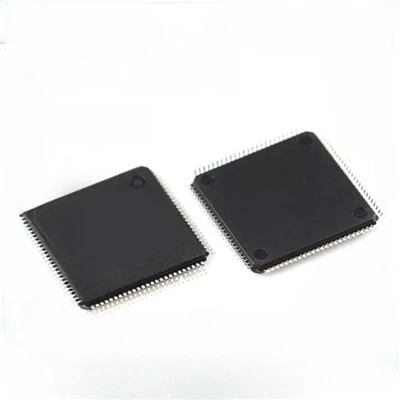
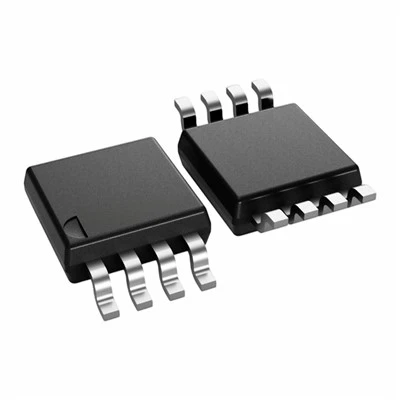
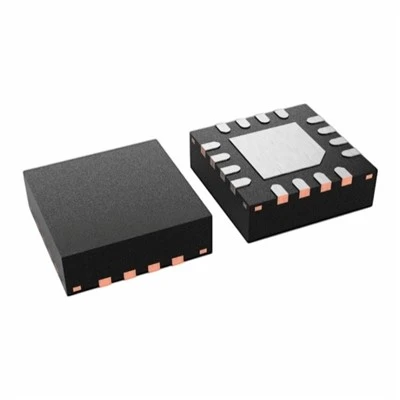
Last but not least, mechanical and packaging details that might seem small but can cause big headaches down the line. What package is the chip in? Most BMICs are surface-mount (SMT), but the specific package type—like QFN, SOT-23, or SOIC—matters for your PCB layout and manufacturing. If you’re working with a small PCB for a wireless earbud, a tiny SOT-23 package is perfect, but a QFN might be too big. Also, check for any special mounting requirements, like thermal pads for heat dissipation, which is important for chips that handle high current. Don’t forget to look at the pinout—make sure the pins align with your PCB design so you don’t have to spin a new board just because the pin order is different.
Let me wrap this up: checking a BMIC datasheet isn’t just about scanning numbers—it’s about matching the chip to your specific product’s needs. Start with application compatibility (chemistry, cell count, core function), then electrical specs (voltage, current, accuracy), safety protections, balancing features, communication protocols, power efficiency, and finally packaging. If you skip any of these, you might end up with a chip that’s not safe, not efficient, or just doesn’t work as well as you need. If you’re not sure which line of BMICs is right for you, our team can walk through the options—whether you need a dedicated charger, a monitor and balancer, a level sensor, an authentication chip, or a protector, our pages have all the datasheet details you need to dig into. When you’re ready to source BMICs for your next project, reach out to our team to start a conversation about your requirements. We’re here to help you pick the right chip, not just sell you one.
References
- "Battery Management ICs: Fundamentals and Applications," Texas Instruments, 2022.
- "Lithium-Ion Battery Cell Balancing Techniques for Electric Vehicles," IEEE Transactions on Power Electronics, vol. 35, no. 4, pp. 3721-3735, 2020.
- "Understanding Quiescent Current in Battery Management Systems," Analog Devices Application Note AN-1234, 2021.
- "Safety Standards for Rechargeable Battery Systems," International Electrotechnical Commission (IEC) Standard 62133, 2017.