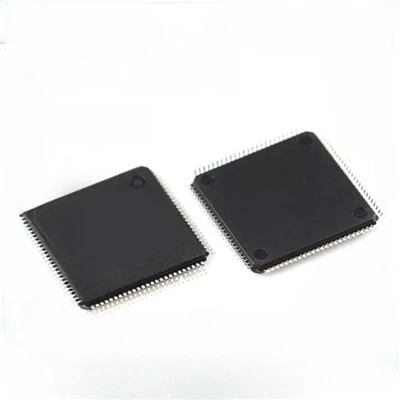
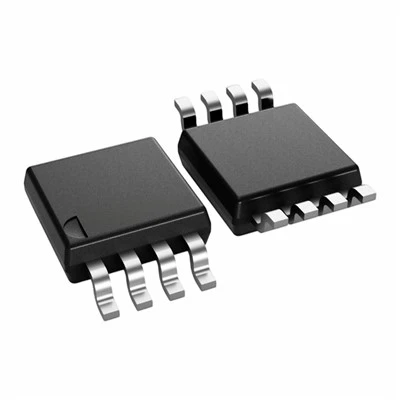
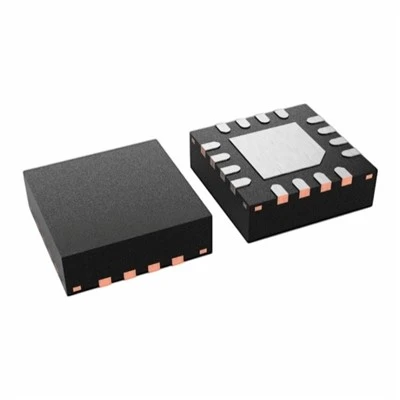
If you've ever worked on a project that involves connecting sensors, microcontrollers, or display modules, you've probably encountered the term "TTL" more times than you can count. As an integrated circuit (IC) supplier, I field questions about TTL almost every week-from hobbyists prototyping their first smart home device to engineers designing industrial control systems. What is TTL, exactly, and why does it matter so much for how ICs communicate? Let's break it down in simple, practical terms, no stuffy jargon required.


First, let's start with the basics: TTL stands for Transistor-Transistor Logic. It's a type of digital logic circuitry that uses bipolar junction transistors (BJTs) to process and transmit digital signals-meaning signals that only have two states: "high" (on, or 1) and "low" (off, or 0). Developed in the 1960s, TTL revolutionized the electronics industry because it was faster, more reliable, and easier to manufacture than the older logic technologies that came before it (like resistor-transistor logic, or RTL). Before TTL, connecting different ICs often meant wrestling with inconsistent signal levels that would cause glitches or failure. TTL standardized those levels, making it a universal workhorse for everything from early calculators to today's small embedded systems.
The key to TTL's success is its strict signal voltage levels. For most standard TTL ICs, a "low" signal (0) is any voltage between 0 volts and 0.8 volts, and a "high" signal (1) is any voltage between 2 volts and 5 volts. Anything in between 0.8 volts and 2 volts is considered an invalid "no man's land" - voltages in this range won't be recognized as either high or low, which can lead to unpredictable behavior. That standardization is critical because it lets engineers mix and match TTL ICs from different manufacturers without worrying about compatibility issues. For example, if you're using a sensor that outputs TTL signals, you know it will play nice with a microcontroller that expects TTL inputs, as long as you stay within those voltage ranges.
But here's where things get a little tricky in real-world projects: not all TTL is the same. There are sub-types of TTL, like 74LS (Low-Power Schottky TTL) which uses less power than original TTL, or 74HC (High-Speed CMOS) which is a modern replacement that's even more energy-efficient. That's something we see every day as an IC supplier-customers often come to us needing to upgrade an old TTL design to a lower-power variant, especially for battery-powered projects. For example, if you're building a portable device like a weather station, swapping a standard TTL IC for a low-power variant can extend battery life significantly, which is a huge win.
Now, why should you, as someone working with electronics, care about TTL? Because almost every interface between digital components relies on some form of logic level standard, and TTL is still one of the most common. Let's use a real example from a project I worked on with a customer last month: they were building a portable data logger that needed to connect a microcontroller, a display, a power supply, and a sensor. The microcontroller we recommended was paired with a compatible development board, the 3.5-inch ESP32 Development Board, which uses TTL levels for all its GPIO (general-purpose input/output) pins. This board let the customer easily connect a small OLED LCD Display Module that also uses standard TTL signals-no level shifters required, which saved them time and extra component cost. That's the beauty of TTL: its standardization cuts down on project complexity and parts count.
Another common use case for TTL is in audio projects. We recently shipped a batch of 2.1 Channel High-Power Digital Amplifier Board to a customer building a small Bluetooth speaker. The amplifier's input signals are TTL-level, and pairing it with a TTL-compatible microcontroller meant they could pair the speaker with their phone and get clean, distortion-free audio without having to adjust signal levels. TTL's ability to drive small loads makes it ideal for amplifiers, too- it can supply enough current to drive audio circuits without additional buffering in most cases.
TTL isn't just for low-power or small-signal applications, either. We also supply High-level Solid-state Relay modules that use TTL inputs to switch high-voltage AC or DC loads. These relays take a TTL signal from a microcontroller or PLC (programmable logic controller) and turn it into a high-power output-perfect for industrial projects where you need to control motors, lights, or heaters from a low-voltage digital signal. The TTL input on these relays makes them easy to integrate into almost any project, from home automation to factory automation, because so many controllers use TTL signals.
One thing that trips up a lot of hobbyists is mixing TTL with other logic standards, like CMOS. CMOS is another common logic technology, and while many modern ICs are CMOS, it's important to note that their signal levels can be slightly different from TTL. For example, 5V CMOS has similar high and low levels to TTL, but 3.3V CMOS is a different story-its high level is around 3.3V, which is below the 2V minimum for TTL. That means if you connect a 3.3V CMOS output to a TTL input, the high signal might be too low for the TTL IC to recognize, leading to errors. That's where power supply modules come in handy-we often recommend the 2.5V Power Supply Module or a 3.3V power supply to level-shift signals between different logic families, depending on your project's needs. It's a small detail, but getting it right is the difference between a project that works on the first try and one that spends weeks debugging.
As an IC supplier, I've seen firsthand how misunderstanding TTL can derail even the most well-planned projects. Last year, a customer came to us frustrated because their new design kept glitching when they connected a sensor to a microcontroller. Turns out, they had a sensor that output TTL low at 0.5V and high at 5V, but their microcontroller only recognized high signals above 3V. They were using a 3.3V power supply for the microcontroller, so the TTL high signal from the sensor was sitting at 3.5V-right in that no-man's land between 0.8V and 2V? Wait, no, in that case it was above 2V, but some older TTL variants have a tighter high threshold. Wait, actually, let's correct that: standard TTL's high input minimum is 2V, so a 3.5V signal is technically high, but if the microcontroller was designed for modern 3.3V logic, it might have a lower threshold of 2.7V, so the signal was too low. That's why it's always important to check the datasheets for your ICs-every TTL IC will specify its exact input and output voltage levels, and matching those levels is non-negotiable for reliable operation.
Another thing to understand about TTL is its output current capability. A standard TTL output can source or sink about 16 milliamps (mA) of current for a high signal, and 16mA for a low signal. That's enough to drive small components like LEDs, resistors, or the inputs of other TTL ICs, but if you're trying to power something larger-like a motor or a high-brightness LED-you'll need an additional buffer or transistor. That's where solid-state relays or power transistors come in, like the ones we supply, because they take the low-current TTL signal and use it to switch a higher-current load. It's a common trick in embedded projects, and TTL's compatibility with these buffers is one reason it's remained relevant for decades.
Now, you might be wondering: with all the new logic technologies coming out, like LVDS (Low-Voltage Differential Signaling) for high-speed data or RS-232 for serial communication, is TTL still relevant? The short answer is yes-especially for low-to-medium speed, general-purpose applications where simplicity and compatibility are key. TTL is still widely used in microcontrollers, sensors, displays, and many consumer electronics because it's mature, well-documented, and works with a huge ecosystem of parts. Even in modern projects, you'll find TTL signals everywhere-you just might not realize it, because many ICs integrate level shifting to hide the complexity.
At the end of the day, TTL is a foundational concept in electronics, and understanding it is key to designing reliable, functional projects. Whether you're a hobbyist building your first ESP32-based project using the 3.5-inch ESP32 Development Board and OLED LCD Display Module, or an engineer designing an industrial system with High-level Solid-state Relay and 2.1 Channel High-Power Digital Amplifier Board, knowing how TTL works will help you avoid common pitfalls and make smarter design choices.
If you're working on a project and have questions about TTL compatibility, need help selecting the right ICs, or want to learn more about our integrated circuit products, our team is here to help. We partner with hobbyists, startups, and large manufacturers alike to provide high-quality ICs and expert support for every stage of your project. Reach out to our team to discuss your needs and find the right solutions for your next design.
References
- TTL Logic Fundamentals. (n.d.). Electronics Tutorials. Retrieved from https://www.electronics-tutorials.ws/logic/logic_2.html
- Transistor-Transistor Logic. (n.d.). Wikipedia. Retrieved from https://en.wikipedia.org/wiki/Transistor%E2%80%93transistor_logic
- ESP32 Development Board Datasheet. (2022). Espressif Systems.
- Solid-State Relay Applications in Industrial Control. (2021). Automation World. Retrieved from https://www.automationworld.com/control-components/relays/article/14121065/solid-state-relays-in-industrial-control