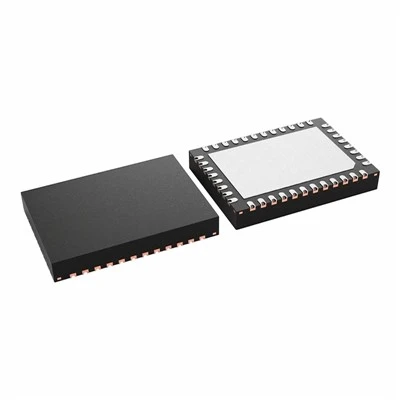
Introduction to IO-Link and Digital I/O
Introduction to IO-Link and Digital I/O.IO-Link is an open, standardized point-to-point serial communication protocol, classified as a short-range communication technology for the industrial field level. Having been incorporated into the IEC 61131-9 international standard, it is primarily used to connect field devices such as sensors and actuators to control systems in industrial automation environments, and thereby overcomes the limitations of traditional industrial I/O interfaces in terms of data exchange.
Unlike traditional fieldbus systems, which are limited to device-level connectivity, IO-Link enables direct communication with the internal components of the lowest-level field devices including sensors and actuators. It supports the transmission of not only process data such as binary (switching and analog signals, but also non-process data including device parameters, diagnostic information, and identification data. In practical applications, IO-Link supports hot-swapping. When a device is replaced, the system can automatically download parameters from the controller or the host to complete configuration, which eliminates the need for manual on-site setup and significantly reduces equipment downtime during the replacement process. Furthermore, this protocol enables real-time collection of diagnostic information including device operating status, temperature, and fault warnings, helping maintenance personnel anticipate equipment failures in advance and facilitating the implementation of predictive maintenance.
Digital I/O (Digital Input/Output) is the most fundamental type of input/output interface in industrial control systems, and is used to transmit discrete digital signals. These signals have only two discrete states, which typically correspond to binary "0" and "1". In industrial scenarios, these two states usually represent high/low voltage levels or on/off switching states. For example, detecting an object via a proximity switch, engaging a relay, or illuminating an indicator light - all such status transmissions are completed via digital I/O.
According to transmission direction, digital I/O can be categorized into digital inputs and digital outputs. Digital inputs are responsible for collecting the switching states of external field devices, and converting on-site on/off signals into digital signals recognizable by the controller, (for example, capturing trigger signals from emergency stop buttons, limit switches, or photoelectric sensors. Digital outputs, by contrast, are responsible for converting control commands issued by the controller into switching signals to drive external actuators, (for example, controlling the switching of contactors, solenoid valves, or alarm lights.
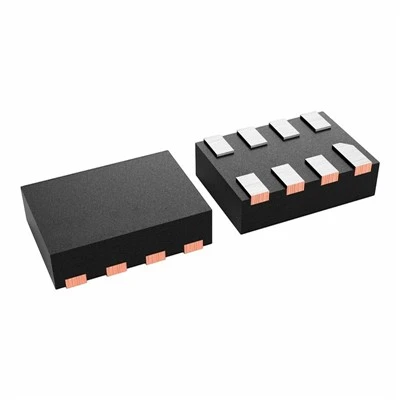
Introduction to IO-Link and Digital I/O
The TIOL221 transceiver integrates two low-power output drivers featuring active reverse-polarity protection. When connected to an IO-Link master through a three-wire interface, this device allows the controller to initiate communication and exchange data with the remote node, while the TIOL221 operates as the complete physical layer for communication. This device also integrates an auxiliary digital input (DI) channel.
This device can withstand IEC 61000-4-5 surges up to 1.2 kV (500 Ω), and is equipped with integrated reverse-polarity protection. In addition to the SPI interface that enables configurability and extended diagnostic capabilities, this device is also provided with a simple pin-programmable interface that facilitates convenient connection to controller circuits. The output current limit can be configured via an external resistor or through SPI according to the set limit. The TIOL221 can be configured to generate wake-up pulses, and is suitable for IO-Link master applications. It is also equipped with fault reporting functions and internal protection mechanisms to cope with undervoltage, overcurrent, and overtemperature conditions.
IO-Link and Digital I/O Parameters
The IO-Link and Digital I/O parameters are as follows:
|
Type |
IO-Link |
|
IEC 61000-4-2 contact (±V) |
8000 |
|
IEC 61000-4-4 EFT (±V) |
4000 |
|
IEC 61000-4-5 (surge) (±V) |
1200 |
|
Current limit (max) (A) |
0.35 |
|
LDO output range (V) |
3.3, 5 |
|
Features |
Configurable current limiter, Dual Channel, Low residual voltage, Remote wakeup, Reverse polarity protection |
|
Operating temperature range (°C) |
-40 to 125 |
Hot Tags: io-link and digital i/o, China io-link and digital i/o manufacturers, suppliers, Fiber Optic Network ICs, HDMI DisplayPort And MIPI ICs, IO Link And Digital I O, LVDS M LVDS And PECL ICs, PCIe SAS And SATA ICs, RS 232 Transceivers