Introduction to Digital Multiplexers and Encoders
A digital multiplexer, often abbreviated as "mux" and also referred to as a data selector, is a combinational logic circuit that selects one signal from multiple digital input sources and routes it to a shared output, in accordance with specific combinations of control signals (called address codes. Its core function is to enable time-division multiplexed transmission, which allows digital signals from different sources to be transmitted over a single transmission line. This method effectively saves transmission line resources and simplifies the overall circuit architecture.
Working Principles of Digital Multiplexers and Encoders
In terms of operating principle, a multiplexer with an $n$-bit address input corresponds to $2^n$ data inputs. Each address combination corresponds to a uniquely determined data input channel, which permits only the selected input to pass through to the output, while all other inputs remain disconnected from the output terminal. Common device configurations include 4-to-1, 8-to-1, and 16-to-1 multiplexers. For example, a standard 8-to-1 multiplexer has a 3-bit address input, eight independent data inputs, and a single output terminal. An address code of "000" selects the first input channel, "001" selects the second channel, and this pattern extends to all input channels; all selection logic is realized through combinations of basic logic gates. In addition to basic data selection, multiplexers can also be used to implement combinational logic functions, convert parallel data to serial data, and serve as waveform generators. They are widely applied in data communication systems, computer memory addressing, and digital signal processing.
An encoder is another typical type of combinational logic circuit, whose function is completely different from that of a digital multiplexer. Its core role is to convert input signals-including both analog signals and specific digital signals (such as those generated by keypresses or position sensors-into binary-coded signals that can be easily recognized and processed by digital systems. It can be regarded as a "signal translator" for digital systems: since most signals encountered in practical applications are discrete and unencoded, the encoder assigns a unique binary code to each valid input signal, allowing subsequent logic circuits to identify the specific meaning of the input.
Specific models of digital multiplexers and encoders
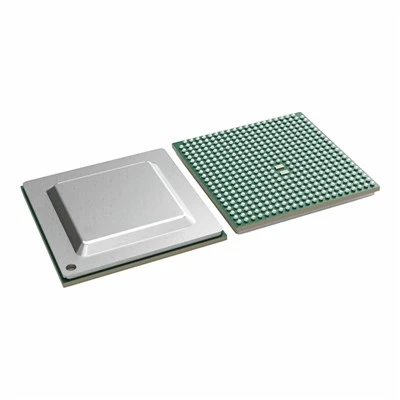
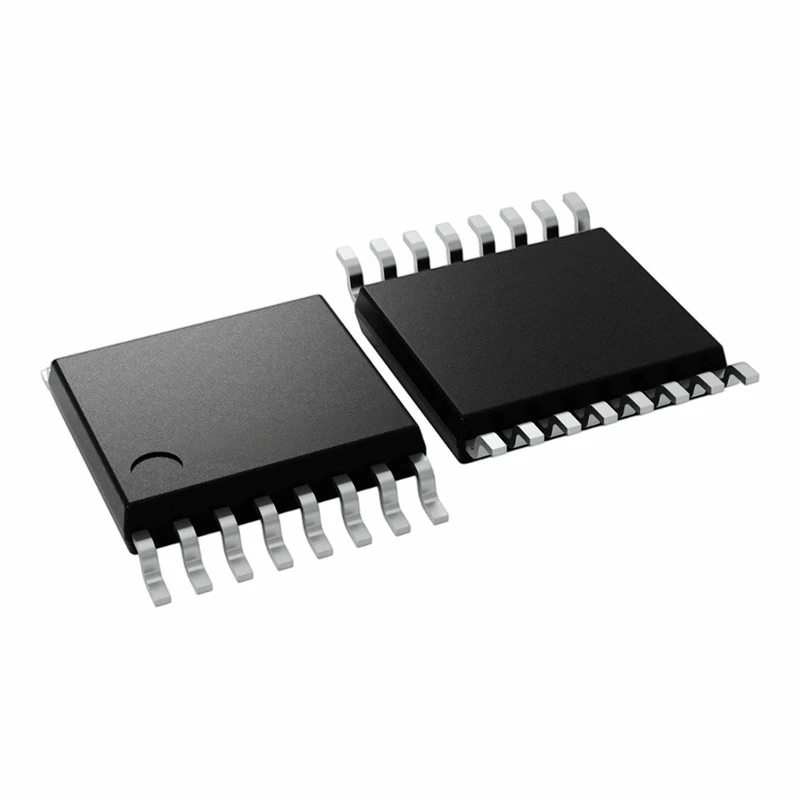
The SN74ACT139 integrates two independent 2-line to 4-line decoders, each equipped with an active-low output strobe denoted as G. When the strobe input is inactive (G = HIGH), all outputs of the corresponding channel are forced to a high logic level. When the strobe input is activated (G = LOW), only the selected output is maintained at a low logic level, while all other outputs of the channel remain at a high logic level.
Digital Multiplexer and Encoder Parameters
|
Technology family |
ACT |
|
Number of channels |
2 |
|
Operating temperature range (°C) |
-40 to 125 |
|
Rating |
Catalog |
|
Supply current (max) (µA) |
2 |
Hot Tags: digital multiplexer and encoder, China digital multiplexer and encoder manufacturers, suppliers, Analog And Precision Switches And Muxe, Digital Demultiplexer And Decoder, Digital Multiplexer And Encoder, Protocol And Bus Switches And Muxe, switches and multiplexers