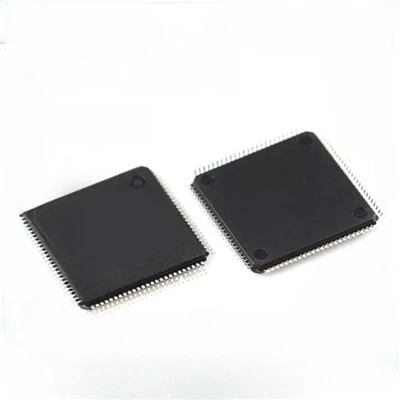
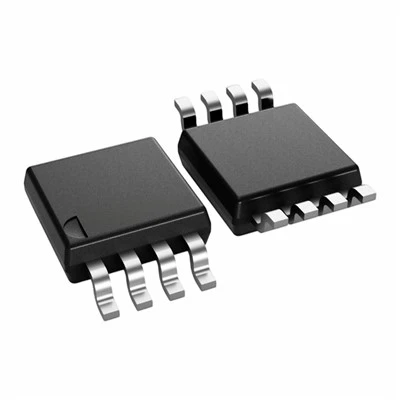
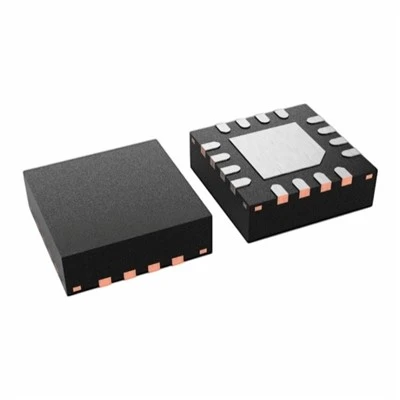
If you work in industrial display manufacturing, you know how tricky testing can be. Whether you’re making high-brightness panels for outdoor signage, compact screens for industrial controls, or even rugged displays for aerospace gear, you need to spot defects fast—dead pixels, uneven backlighting, color calibration drift, or edge warping that’s easy to miss with a human eye or basic optical tools. For years, most teams relied on specialized display test instruments tailored to specific screen sizes and technologies, but a lot of those tools are expensive, inflexible, and hard to update when your product line shifts. That’s where industrial digital micromirror devices (DMDs) come in, and lately, more of us in the space are asking: Can industrial DMDs actually work as a more agile, cost-effective alternative for display testing in industrial settings?
First, let’s cut through the jargon: industrial DMDs aren’t the same as the DMDs you might have seen in consumer projectors or home theater setups. While consumer DMDs are built for consistent color and brightness over a short lifespan, our industrial-grade DMDs are engineered for 24/7 operation, extreme temperature swings, and high-duty-cycle use—perfect for the fast pace of factory floors. We offer three core lines to match different test needs: Visible DMDs for standard display testing in the visible light spectrum, NIR DMDs for near-infrared applications like inspecting display backlight layers (which are invisible to the naked eye), and UV DMDs for testing new display materials that react to ultraviolet light.
Here’s why they’re a game-changer for display testing: A DMD is basically a tiny, high-resolution array of micro mirrors—each mirror acts like a miniature light switch, tilting on or off thousands of times per second to redirect or block light. For display testing, that means instead of relying on fixed light sources or camera setups, you can program the DMD to project custom test patterns on the fly. No more swapping out physical test masks or adjusting light filters every time you switch between testing a 10-inch industrial tablet and a 55-inch outdoor display. Want a vertical gradient to check for brightness uniformity? The DMD can generate that in milliseconds, no hardware changes needed. Need to test dark-state uniformity for a new OLED screen? Same thing—just adjust the mirror tilt to create precise, uniform black fields to spot dead or dim pixels that would otherwise slip through.
But let’s get real: it’s not a perfect fit for every test job. A lot of people new to industrial DMDs assume they can replace every display test tool, but that’s not the case. Let’s break down the use cases where they shine, and where they might not be the best pick.
First, where industrial DMDs nail display testing: High-mix, low-to-medium volume production lines. If you’re a mid-sized display maker that runs 5 different screen sizes across 3 product lines, the flexibility of DMDs saves you a ton of time and money. Traditional test systems cost tens of thousands of dollars each, and many only work for a single screen size or type. A single industrial DMD setup can be programmed to test anything from small rugged displays to large-format digital signage, cutting down on the number of test tools you need to maintain. We’ve seen a few clients use our Visible DMDs to test automotive dashboard displays too—those have to work reliably in everything from Arctic winters to desert heat, and the DMD’s ability to generate precise test patterns even in extreme temperatures helps catch defects that would only show up under real operating conditions.
Another big win: non-uniformity testing for edge-lit displays. A lot of industrial displays use edge lighting instead of direct backlighting, and getting even brightness across the entire screen is trickier. Traditional test cameras can struggle to pick up subtle unevenness around the edges or corners, because they’re calibrated for average brightness across the whole screen. Our NIR DMDs help here because near-infrared light penetrates the display’s diffuser layer, so you can map how light spreads from the edge LEDs with way higher accuracy than visible light tools. We worked with one signage client last year who switched from a suite of fixed test masks to our NIR DMDs, and they cut their defect rate by 12% because they were catching edge non-uniformity that their old system missed.
Now, where industrial DMDs might fall short: If you’re running a high-volume, single-product line (like a factory that makes 100,000 identical 7-inch displays a month), the fixed test rigs you already have are probably cheaper and faster. DMDs are great for flexibility, but they do require a little programming to set up test patterns, so for a line that never changes, the extra work isn’t worth it. Also, if you need super-high-resolution pixel-level testing for micro-displays (like those used in head-mounted displays for industrial AR), you might need a specialized DMD with smaller mirror pitch to match the tiny display pixels. Our standard industrial DMDs work for most mainstream display sizes, but micro-display testing is a bit of a niche case.
Wait, there’s another thing a lot of people don’t talk about: DMDs can also integrate with your existing test equipment, so you don’t have to rip out your current setup to use them. A lot of our clients add our DMDs as a modular component to their existing optical test systems—so they can stick with their trusted cameras and software, and just add the DMD to generate custom test patterns. That’s way easier than a full system overhaul, which saves time and budget for factories that are already stretched thin.
Let’s talk about real examples to make this concrete. Last quarter, we had a client that makes industrial control panel displays for factory machinery. They were using three different test tools: one for small 8-inch panels, one for 15-inch panels, and one for checking color accuracy across all units. Each tool cost around $15,000, and they had to spend 2 hours a day swapping tools when switching production lines. They swapped out two of the tools for one of our Visible DMD setups, and now they can test both small and large panels with the same system. They told us their testing time per unit dropped by 30%, and their defect detection rate went up because they could adjust test patterns to match each panel’s specific design, instead of relying on generic factory defaults.
Another example: a company that makes rugged displays for military vehicles. Those displays have to work in -40°F to 140°F, so standard test tools (which often fail at extreme temperatures) don’t cut it. Our industrial DMDs are rated for that exact temperature range, so they can test the displays under real operating conditions without sending them out to an environmental lab. That cut their test time from 5 days per unit to 4 hours, which is a huge win for their production timeline.
Now, let’s address a common question: Do industrial DMDs hold up to the rigors of a factory floor? We test our DMDs to last over 100,000 hours of operation, which is way more than the lifespan of most display products they test. They’re sealed to resist dust and moisture, too, so even in dusty automotive or aerospace factories, they don’t get damaged easily. That’s a big difference from consumer DMDs, which are designed for home use and can’t handle the harsh conditions of industrial settings.
If you’re still on the fence about whether industrial DMDs are right for your display testing, here’s a quick checklist: Do you work with multiple display sizes or technologies? Do you need to catch subtle defects that traditional test tools miss? Are you looking to cut down on the number of specialized test tools you have to maintain? If you answered yes to any of those, industrial DMDs are worth exploring.


We know every factory’s needs are different, so we don’t push a one-size-fits-all solution. Our team works with display makers to figure out which DMD line is right for their test cases—whether that’s our Visible DMDs for standard color and uniformity testing, NIR DMDs for backlight and edge-lit testing, or UV DMDs for testing new display materials. We can even help you integrate the DMD into your existing test setup, so you don’t have to start from scratch.
If you’re ready to learn more about how industrial DMDs can improve your display testing process, or want to chat through whether it’s a fit for your production line, reach out to our team to connect for a procurement discussion. We’re here to answer your questions and work with you to find the right solution.
References
- Texas Instruments. (2023). Industrial DMD Technology for Optical Testing. Retrieved from TI DLP Technical Library
- Industrial Display Magazine. (2022). Trends in Display Testing for Industrial Applications. Industrial Display Quarterly, Vol. 18, Issue 3, pp. 45–52
- Smith, J. et al. (2021). Non-Uniformity Testing of Edge-Lit Displays Using Near-Infrared DMD Systems. Journal of Display Technology, Vol. 17, No. 6, pp. 587–593
- DMD Reliability Standards. (2023). JEDEC Solid State Technology Association, JESD22-A114F Standard